Where Does My Donation Go? Understanding the Real Cost of Caring for a Child
Behind the polite phrasing of where do child sponsorship donations go sits a sharper question, and we would rather answer that one: if I give you money, will it truly reach a child, and how would I know? It is exactly the right thing to ask. We have written before that good donors ask hard questions, so this article is our own answer, given the way we'd want to receive it: plainly.
One honesty up front. You will not find a table of amounts on this page, because prices in Jinja move with the seasons and we refuse to publish figures we cannot keep current or verify. What you will find is something we think serves you better: the full path your gift travels, what it buys and in what order, what it never buys, and a standing invitation to ask us for the real number on anything, today, at today's prices.
The path of a gift, end to end
Your gift's journey is short enough to describe in one paragraph, which is itself worth noticing. You give on our Sponsor a Child page through Stripe, the same secure payment processor used by millions of businesses, so your card details never touch us. The money arrives in the ministry's account. From there it is spent by the family who run the home, in Jinja, at the places our life actually happens: the market stalls where food is bought, the schools where fees are paid, the clinic when a child is unwell, the hardware shop when the roof needs attention.
That is the entire chain. There is no international office taking a first slice, no fundraising agency on commission, no consultant between your card and the cooking pot. As we explained in why local leadership matters, the people who receive the money and the people who spend it on the children are the same people, living in the same house.
What your gift buys, in order of constancy
Rather than pretend to a precision we can't verify, here is our spending as we actually experience it: ordered by how relentlessly each cost returns.
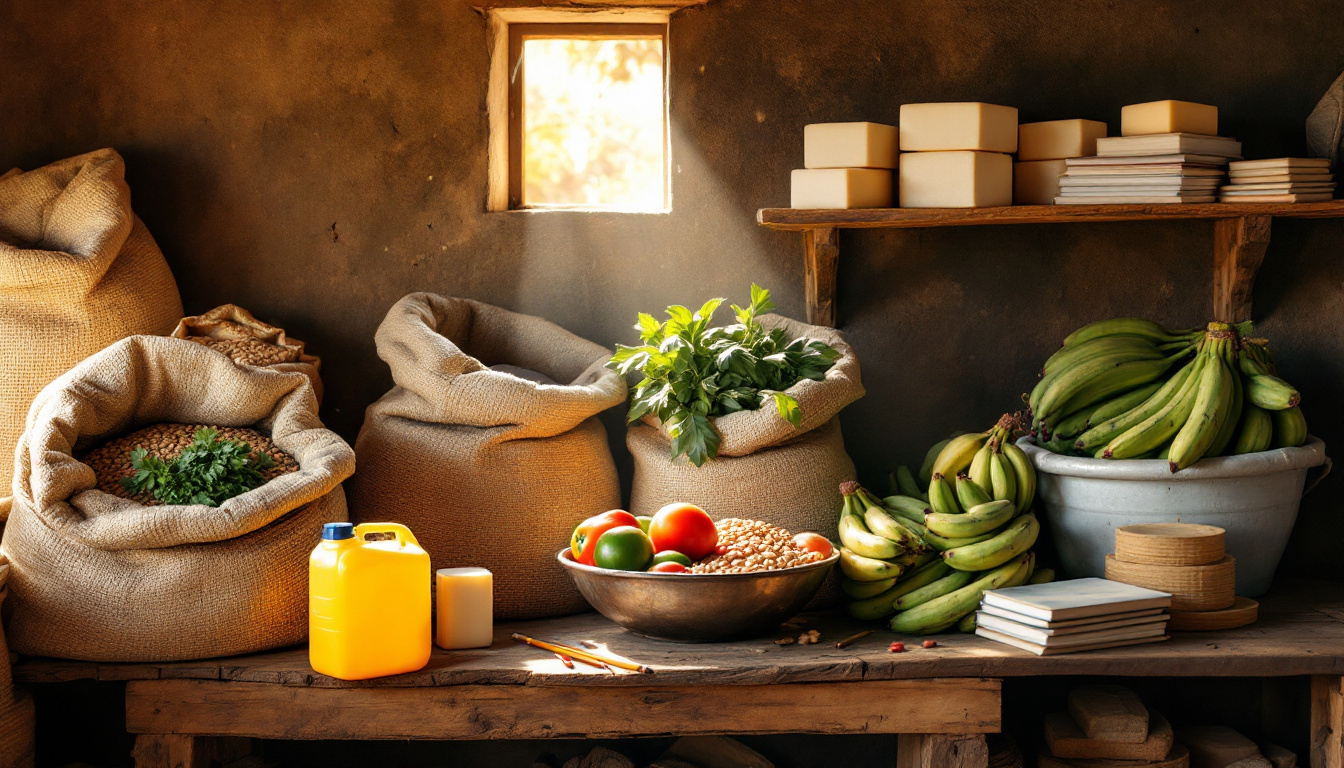
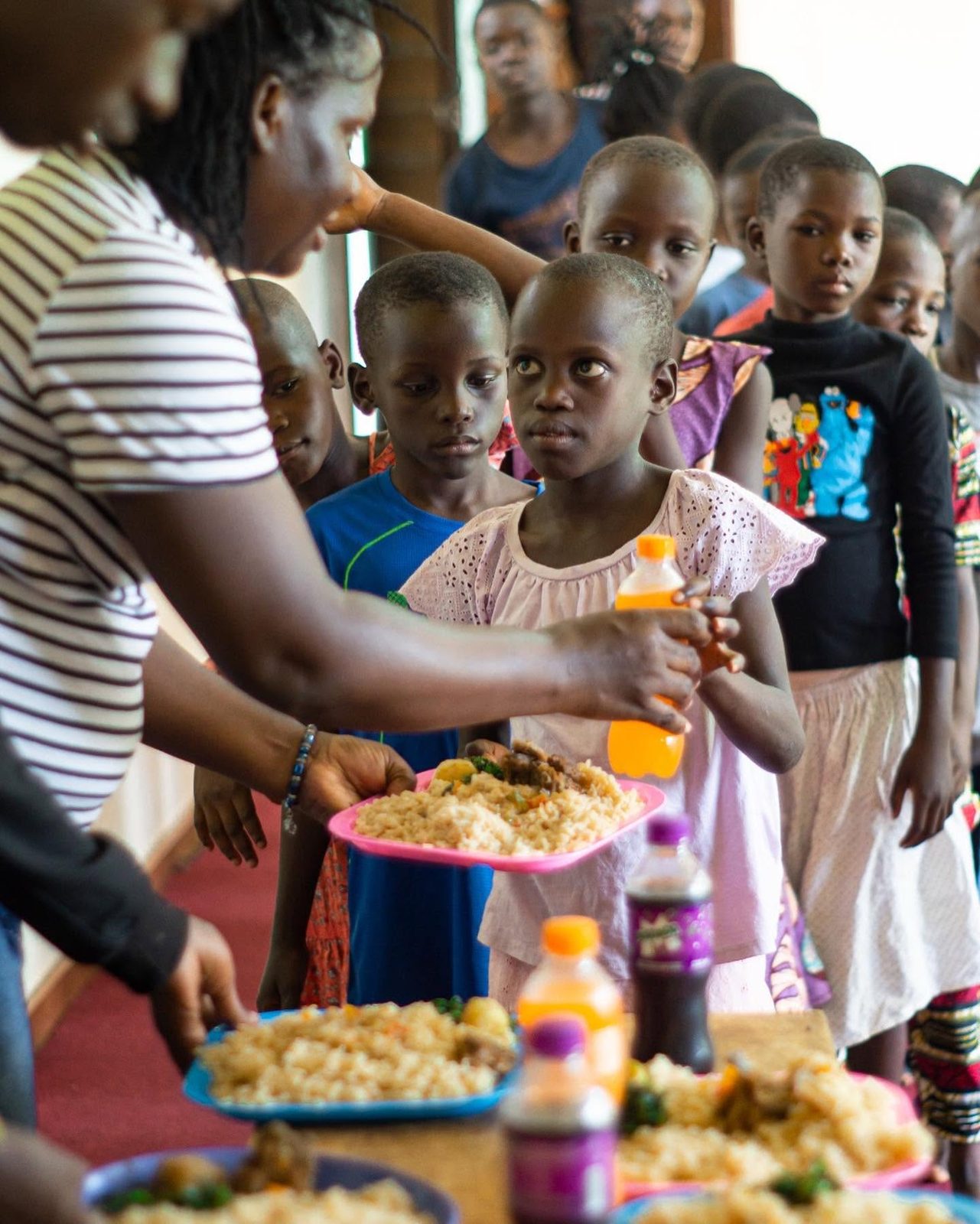
- Food, daily. The most constant line there is. Fifty children eat every day, and our nutrition article lists exactly what fills the pot: matooke, posho, beans, groundnuts, greens, with our own gardens easing the bill.
- Education, termly and largest. Fees, uniforms, books, exams and transport, three times a year, for a houseful of students. We itemised it all in the school fees article; it is our biggest single commitment and our proudest.
- The home, monthly. Rent, water, power, repairs, bedding, soap: the unphotogenic budget that keeps the promise of permanence.
- The carers, monthly. The consistent adults every article on this blog keeps returning to are faithful people who are also paid people. Their wages are not an overhead on the children's care. They are the children's care.
- Healthcare, as needed. Prevention every week through food, water and soap; treatment promptly when a child is unwell, because delay is the expensive option.
- Childhood, always. The football, the paint, the birthday cake. A small line we defend without apology, for reasons we've written a whole article about.
What your gift never buys
Sometimes the clearest accounting is the negative kind. Your gift to Tender Love does not fund expatriate salaries, international flights, a head office in a distant capital, gala dinners, or professional fundraising commissions. Not because we itemised and cut those things, but because our shape makes them impossible: we are a family in Jinja raising children in our own town.
We also do not buy children's images for marketing, in either sense of the word. Our dignity commitments mean no child's photograph or story is traded on to raise money at their expense, which is a spending decision as much as an ethical one.
Who decides, and why that matters
Every spending decision is made by Dominic and Rachael, the founders who live with the children, with the school calendar on the wall and the market prices of the week in their heads. When money is short, they decide what waits, and they are the ones who look the children in the eye over dinner either way.
We think that is the strongest accountability a small ministry can offer: the decision-makers live inside the consequences. It is the opposite of a budget approved from a distance, and it is why donors who ask who really runs a charity are asking the most revealing question there is.
One pot, honestly
We repeat this in every article that touches money, because supporters deserve to hear it from us and not discover it later: gifts join one shared provision for the whole household. There is no separate account in each child's name, and no child eats better because their sponsor gives more. Fifty children are raised as one family, funded as one family.
We run it that way because it is how a healthy household works, and because the alternative would make some children more valuable than others, which is a lesson we will never teach. Your gift's destination is therefore precise and plural at once: all of them, together.
Why we won't say "100% goes to the children"
You have seen the slogan. We understand its appeal, and we won't use it, because taken literally it is almost never true of anyone. Every organisation on earth has costs that are not food in a child's mouth: a website, bank charges, a tin of paint, wages for carers. The honest version of the slogan is the one this article has been describing: everything goes to the household the children live in, and the household is the care.
When a charity's marketing sounds too clean to be real, our guide to giving safely suggests treating that as a question worth asking. We would rather earn your trust with rougher, truer sentences than borrow it with a slogan.
How to check any of this
Here is our standing transparency promise, and we mean it as policy rather than politeness: ask us for the real number on anything, and we will tell you at today's prices. What a term of secondary school fees costs right now. What the market run cost this week. What the last repair was and what we paid. A page of figures goes stale; a family that answers questions doesn't.
You can write to us with any question about money and receive an answer from the people who spent it, from Plot 14A Circular Road, Jinja. Pair that with the human checks we've published elsewhere, named leaders, dignified storytelling, secure payment, and openness to hard questions, and you can give with the confidence that comes from verification rather than vibes.
Give with your eyes open
So, where does your donation go? Through a secure checkout, into one family's account in Jinja, and out again as beans and books, fees and wages, soap and birthday cake, in the order the household's life demands. No slices taken on the way, no child ranked above another, and every line of it open to your questions.
If that is the kind of giving you have been looking for, you can sponsor a child monthly, which as we wrote last week is the rhythm this whole household runs on, or give once through our ways to help page. Either way, you now know exactly what your generosity becomes. It looks like an ordinary day, fully paid for.
Frequently asked questions
Where do child sponsorship donations go at Tender Love? +
Why doesn't Tender Love publish a table of costs? +
What is the biggest cost in caring for a child in Uganda? +
Does my donation go to one specific child? +
Are donations to Tender Love secure? +
Why won't Tender Love claim that 100% goes to the children? +
How can I verify how my donation is used? +
Every child deserves to be loved
Your support helps provide food, education, healthcare and a loving Christian family for vulnerable children in Jinja, Uganda. Will you help today?