Why a Safe and Loving Home Can Change a Child's Future
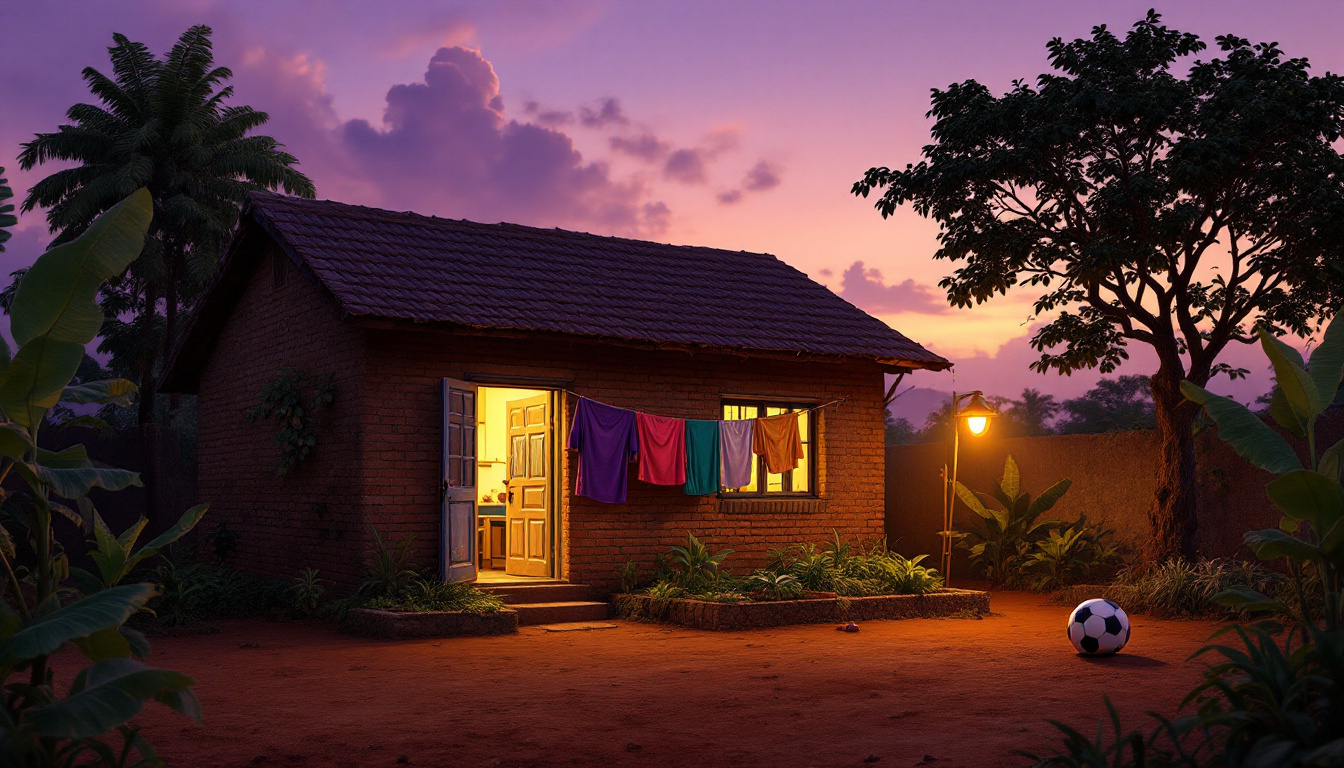
Of everything a vulnerable child needs, most items can, in principle, be delivered. Food can be bought, fees can be paid, medicine can be fetched. But a safe home for vulnerable children is different in kind. A home cannot be delivered. It has to be lived in, kept, defended and, above all, promised: you will still live here at Christmas. You will still live here next year.
This article is about that promise. Why the home itself, not just the provisions inside it, is what changes a child's future; what the difference is between being housed and being home; and why the least photographed line in our budget, the one that simply keeps the house standing and staffed, might be the most important money we spend.
The home is the delivery mechanism
Across this series we have written about food, school fees, nutrition, clean water and protection as if they were separate subjects. Here is the thing that makes them one subject: every single one of them is administered through a home. Meals are cooked in its kitchen, homework is done at its table, water is stored in its containers, bedtimes happen under its roof, and the consistent adults who make child protection real are the adults who live there.
Take the home away and all the provision in the world turns into logistics without a destination. Put a stable home under a child and every shilling of support suddenly has somewhere to land. That is why we describe sponsorship as funding a household rather than buying items, a point we unpacked in what sponsorship actually provides.
Housed is not the same as home
A roof, a bed and a lockable door make a child housed. Home is made of quieter materials: a place at the table that is yours, a bed nobody else's bag lands on, adults who notice what you like, routines that hold whether or not you had a good day, and the unremarkable certainty that tomorrow will look like today.
Child-welfare research has converged on this distinction. UNICEF and Save the Children consistently find that children flourish in stable, family-style care and struggle in arrangements that are large, impersonal or temporary, however clean the dormitories. It is the reason our own model is family-based care rather than an institution with better decoration.
What life without a stable home does
The opposite of home, for most vulnerable children in Uganda, is not the street. It is churn: being passed between relatives as each household's money or patience runs out, moving schools with every move, arriving always as the extra child in someone else's story. Some children do end up on the street; many more simply end up nowhere in particular, for years.
Churn teaches lessons no child should learn. Don't unpack. Don't attach. Don't bother starting the school term properly, because you may not finish it, a spiral we described in our article on school fees. A child in churn is spending their energy on surviving transitions that a settled child spends on growing up.
Permanence: the promise that changes futures
Here is the deepest thing a safe home does, and the reason this article's title mentions the future. Children only plan forward from stable ground. A child who does not know where they will live next year cannot afford to dream about five years from now; all their imagination is spent on next month.
The moment a child truly believes the promise, you will still live here, something remarkable unlocks. They start finishing things: school years, friendships, arguments, library books. They start wanting things that take years to get, which is the entire psychology on which education's escape from poverty depends. Permanence is not a comfort. It is the precondition for ambition.
We have watched new children arrive guarding their shoes, and we have watched the same children, a year later, argue about who will be a doctor and who will be a pilot. The food helped and the school helped. But it was the promise that did it.
A home in your own world
A safe home also has an address, and the address matters. Our children's home stands in Jinja, in the community they come from, among the languages, markets and church bells of their own world. They are not being raised in a bubble to be returned to Uganda later; they are growing up Ugandan, at home, with local adults leading and neighbours who know their names.
That continuity of place is part of the safety. A child rooted in their own community keeps their culture, their connections and their sense of belonging to somewhere, which is an inheritance no amount of provision can replace.
Our home in Jinja
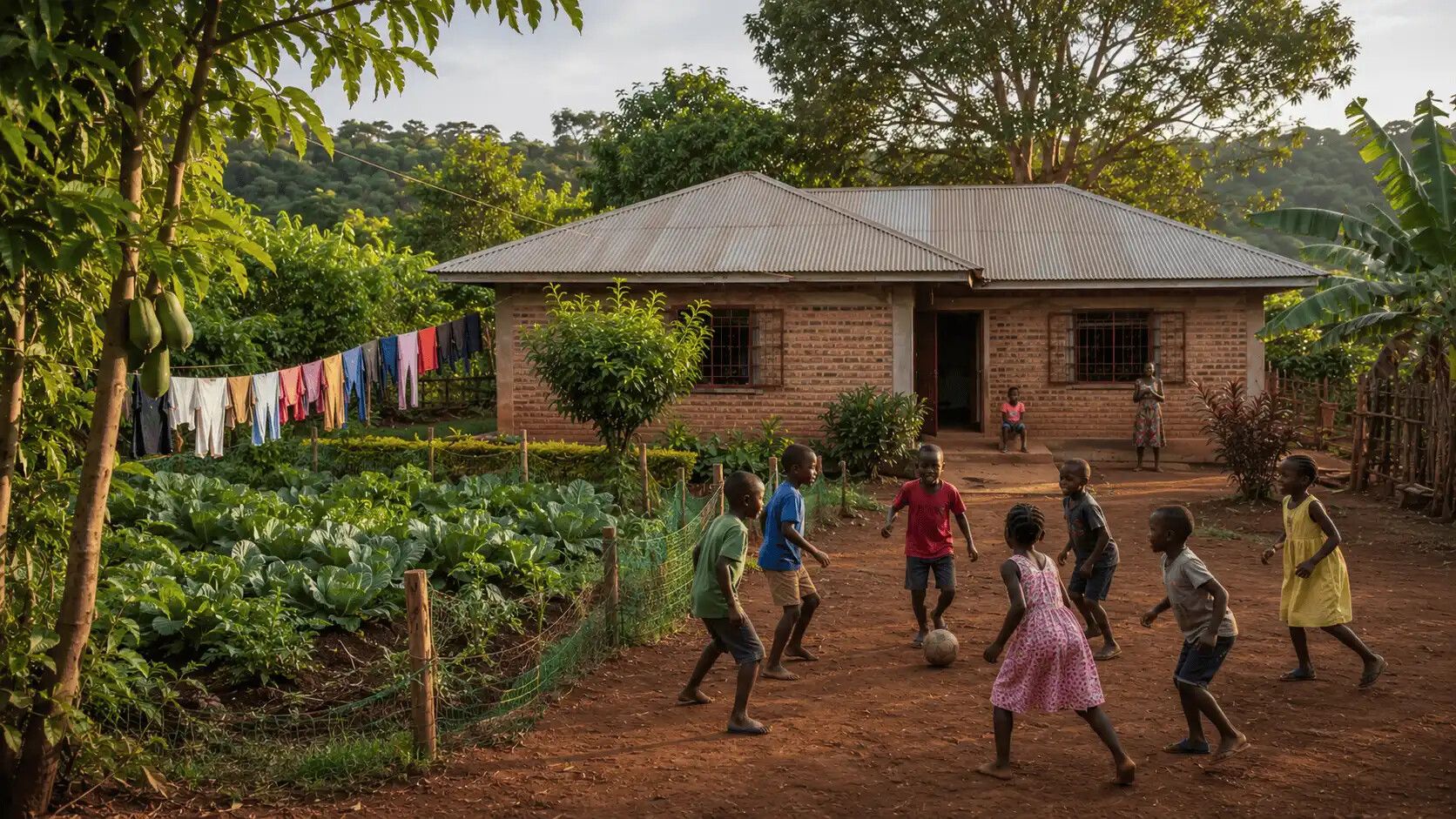
What does all this look like in practice? Honestly, it looks ordinary, which is the achievement. One house and compound on Circular Road. Fifty children plus our own four, under one roof, with consistent carers. Washing on the line, vegetables in the garden, a football match most afternoons, homework at the table, prayers before bed. The same faces at breakfast as at dinner, the same bed every night, year after year.
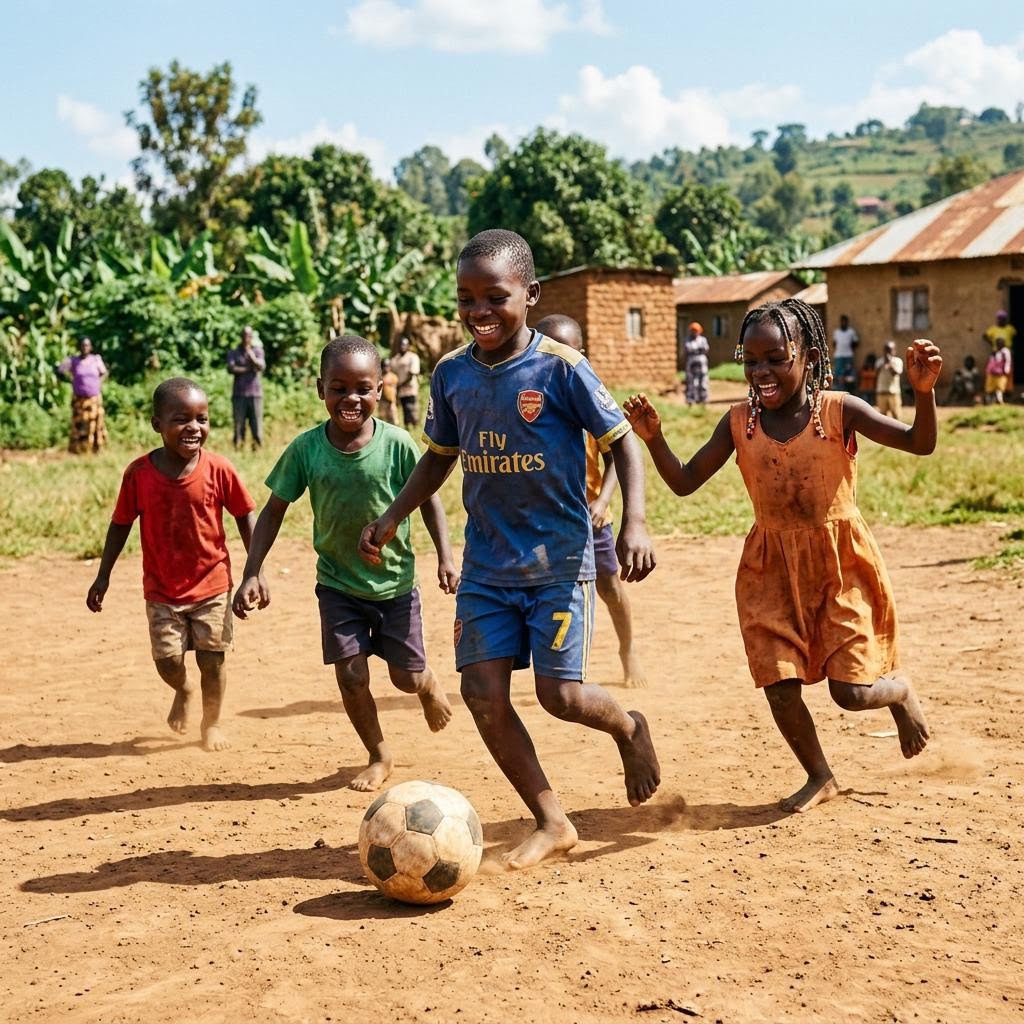
Visitors sometimes expect a facility and are surprised to find a family home that is simply louder than most. We take that as the highest compliment. You can walk through a whole day of it in daily life at Tender Love.
The budget nobody photographs
Every home stands on money that makes for terrible photography: rent and repairs, water and power, bedding and kitchenware, and the faithful adults who cook, comfort, supervise and stay. No donor ever framed a picture of a paid utility bill. Yet this is the spending that keeps the promise of permanence, because a home that cannot pay its bills becomes, sooner or later, another goodbye.
This is why we are always honest that gifts fund the whole household. The glamorous costs and the invisible ones travel together, and the invisible ones are load-bearing. Our guide to what sponsorship covers lists them plainly, right down to the repairs.
A place prepared
As a Christian family, we cannot write about home without hearing the deeper echo. The faith our children grow up in speaks of a God who prepares places for people, who sets the lonely in families, and who is himself a refuge. When a child who has lost every safe place is given a permanent one, something is being preached without a single word.
We tell our children they are wanted here for good. The house makes the sentence believable, and the years make it true.
How you can help keep the promise
A safe home is kept, month after month, by exactly the kind of support you would guess by now: steady. Monthly sponsorship at any level helps carry the rent, repairs, utilities and carers that keep fifty childhoods on stable ground, alongside the food and school fees that land inside it.
One-off gifts through our ways to help page are welcome for the same reasons, and if you would like to know more about the home itself, from the garden to the evening routine, ask us anything. It is our favourite subject, because it is where we live.
Frequently asked questions
Why does a safe home matter so much for vulnerable children? +
What is the difference between being housed and having a home? +
What happens to children without a stable home in Uganda? +
How does a permanent home change a child's future? +
What is Tender Love's home actually like? +
What does it cost to keep a children's home running? +
How can I help provide a safe home for a child in Uganda? +
Every child deserves to be loved
Your support helps provide food, education, healthcare and a loving Christian family for vulnerable children in Jinja, Uganda. Will you help today?