Food, Nutrition and Growing Up Healthy: Why Good Nutrition Matters for Uganda's Children
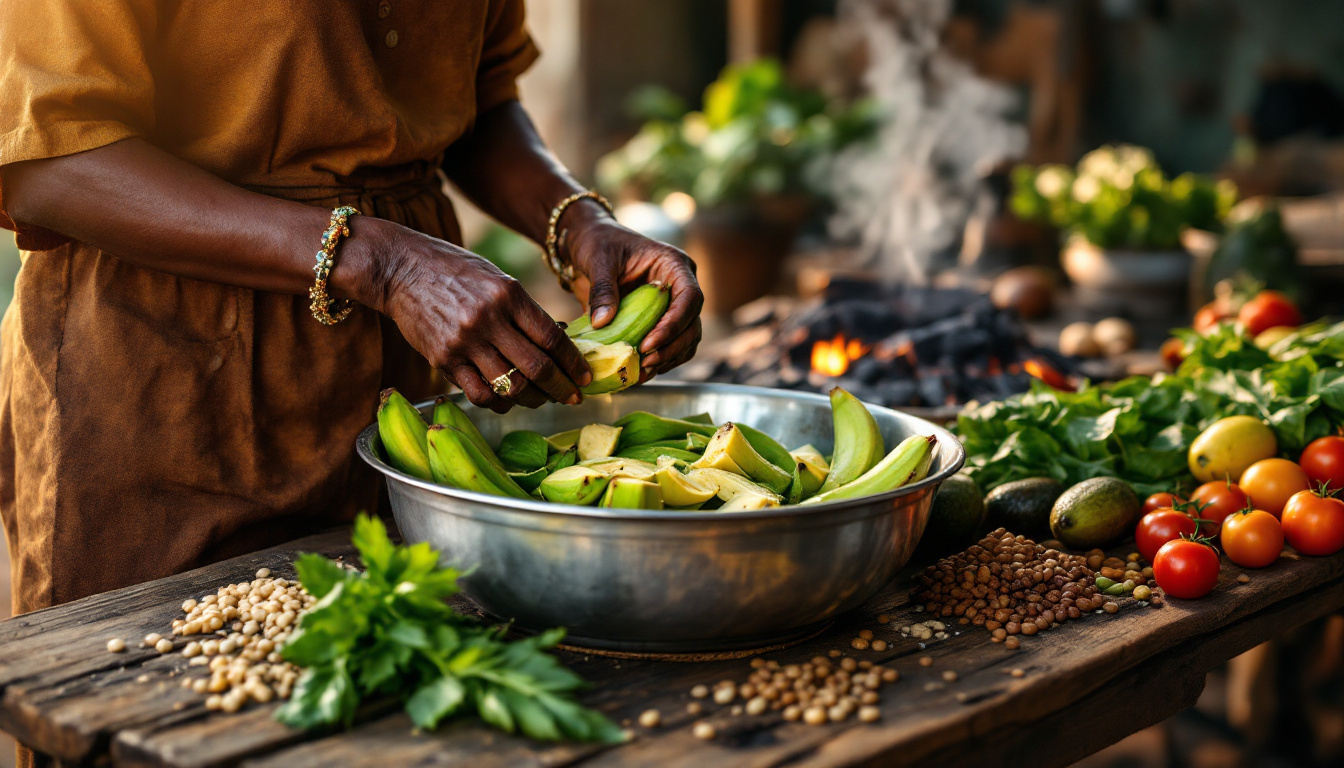
When people overseas picture child nutrition in Uganda as a problem, they usually picture the extreme: the famine photograph, the emergency feeding centre. Those crises are real in parts of the world, but they are not the story of the children we know. The hunger that quietly holds Ugandan children back is far more ordinary, and because it is ordinary, it is easy to miss.
It looks like a child who eats, but not quite enough. Meals that fill a stomach without feeding a body. A term of school survived on one meal a day. This article is about that quiet shortfall: what it costs a growing child, what good nutrition actually looks like in a Ugandan kitchen, and how reliable, unremarkable meals became one of the proudest things we provide.
The quiet kind of hunger
Nutrition experts draw a distinction that every carer in Uganda understands instinctively: there is hunger that empties a stomach, and there is the subtler shortfall where a child eats something most days but not enough of the right things. A diet of starch alone can keep a child alive and still leave them short of the protein, fats, vitamins and minerals a growing body is built from.
This second kind of hunger doesn't photograph. The child is at school, playing, smiling. But they are a little smaller than they should be, a little more often unwell, a little slower to shake off what other children shrug off. Organisations like UNICEF have spent decades showing that this everyday undernutrition, not the dramatic kind, is what quietly limits millions of childhoods. It is also, thankfully, the kind that ordinary faithfulness can fix.
What the shortfall costs a child
Food is not one need among many; it is the platform the other needs stand on. A persistently under-fed child pays in at least four currencies:
- Growth. Bodies build with what they are given. Too little, for too long, and a child simply grows less than they were made to.
- Health. Good food is the immune system's budget. Under-fed children catch more, suffer longer and recover slower, turning ordinary childhood illness into something that keeps returning.
- Concentration. Hunger is loud. It sits in the front row of a child's attention and talks over the teacher, which is why feeding a student is part of schooling them.
- Joy. The least measured cost and the most visible one. Anyone who has watched a well-fed child tear across a yard knows what fuel is for.
Why the earliest years matter most
Nutrition matters at every age, but not equally. The World Health Organization and UNICEF have long emphasised the earliest window of life, from pregnancy through a child's first years, when brains and bodies are built at a pace never repeated. Shortfalls in that window are the hardest to undo later, which is why the youngest children in any household deserve the first claim on the pot.
We see the other side of that truth as children grow: a school-aged child or teenager given steady, adequate food does a remarkable amount of catching up. Late is harder than early, but late is nothing like too late. Watching a child fill out, find their energy and grow into themselves over their first year in our care is one of the quiet privileges of this work.
What good food looks like in Uganda
Here's the encouraging part: good child nutrition in Uganda does not require imported anything. The food that raises healthy children here is the food of ordinary Ugandan kitchens, most of it grown within sight of where it is eaten:
- Matooke and posho. The energy base: steamed green banana and maize meal, the fuel of everyday life.
- Beans and groundnuts. The protein workhorses, affordable and everywhere, with groundnut sauce doing double duty as flavour and nourishment.
- Greens and vegetables. Dodo and other leafy greens, tomatoes, onions and cabbage, carrying the vitamins and minerals a starch-only diet lacks.
- Fruit. Bananas, mangoes, avocados and jackfruit in season, which in Jinja is a generous arrangement.
- Eggs, fish and meat. Less frequent and more precious, stretched wisely across a household and celebrated when they appear.
The barrier for poor families is rarely knowledge. Ugandan mothers know exactly what a child should eat. The barrier is money and reliability: protein costs more than starch, and a family in crisis rations the expensive foods first. Fixing child nutrition is therefore less about teaching and more about making the good, local diet affordable and constant. That is precisely what steady support does.
Nutrition and learning are one subject
We wrote in our piece on education and the poverty cycle that a school place only works when there is a fed, rested child in it, and nutrition is the largest part of that fine print. A hungry student attends less, concentrates less and learns less from the same lesson, so every shilling spent on food is quietly also spent on school.
It runs the other direction too. School is where many Ugandan children get a midday meal, which makes keeping up with school costs a nutrition intervention as much as an educational one. Food and education are not two lines on our budget that compete; they are one project that appears twice.
Food's quiet partner: clean water
A meal is only as good as the water beside it. Unsafe water and poor sanitation steal nutrition from the inside, causing the repeated stomach illnesses that drain away whatever a child has eaten. Clean water, soap and decent sanitation are nutrition workers in disguise, which is why we treat them as part of feeding the family, not a separate subject.
There is more to say about water than fits here, and it deserves its own article soon. For now, the short version: when you picture your support becoming food, picture the clean water beside the plate as well.
Our gardens: food that teaches
Some of the food at Tender Love never sees a market. Our vegetable gardens put greens and vegetables on the table, stretch the food budget in the expensive weeks, and hand the children something no shop sells: the experience of growing what you eat.
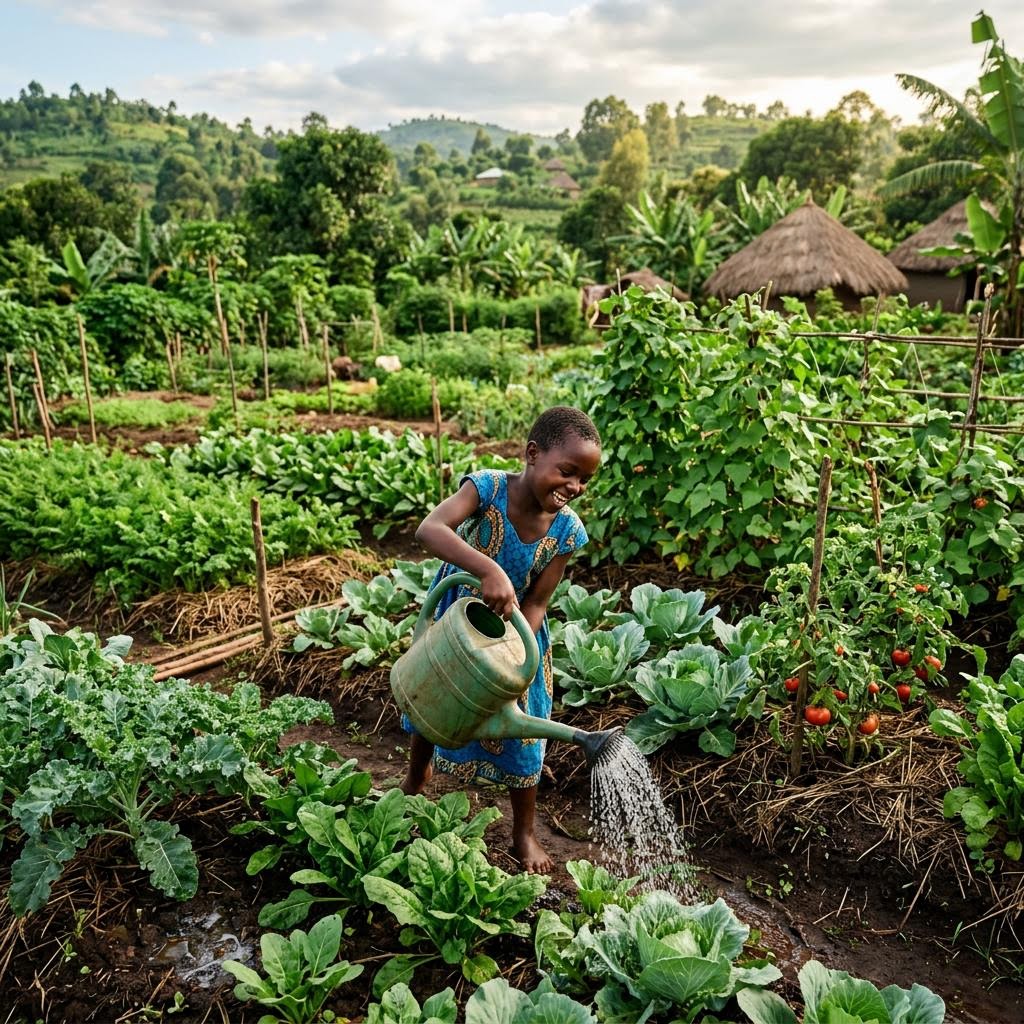
Children who plant, water and harvest learn where food comes from and what it costs to make. Those are life skills in the fullest sense, part of the road to adulthood we are building for every child here, and the vegetables taste better for it. Ask any of our children.
Mealtimes at Tender Love
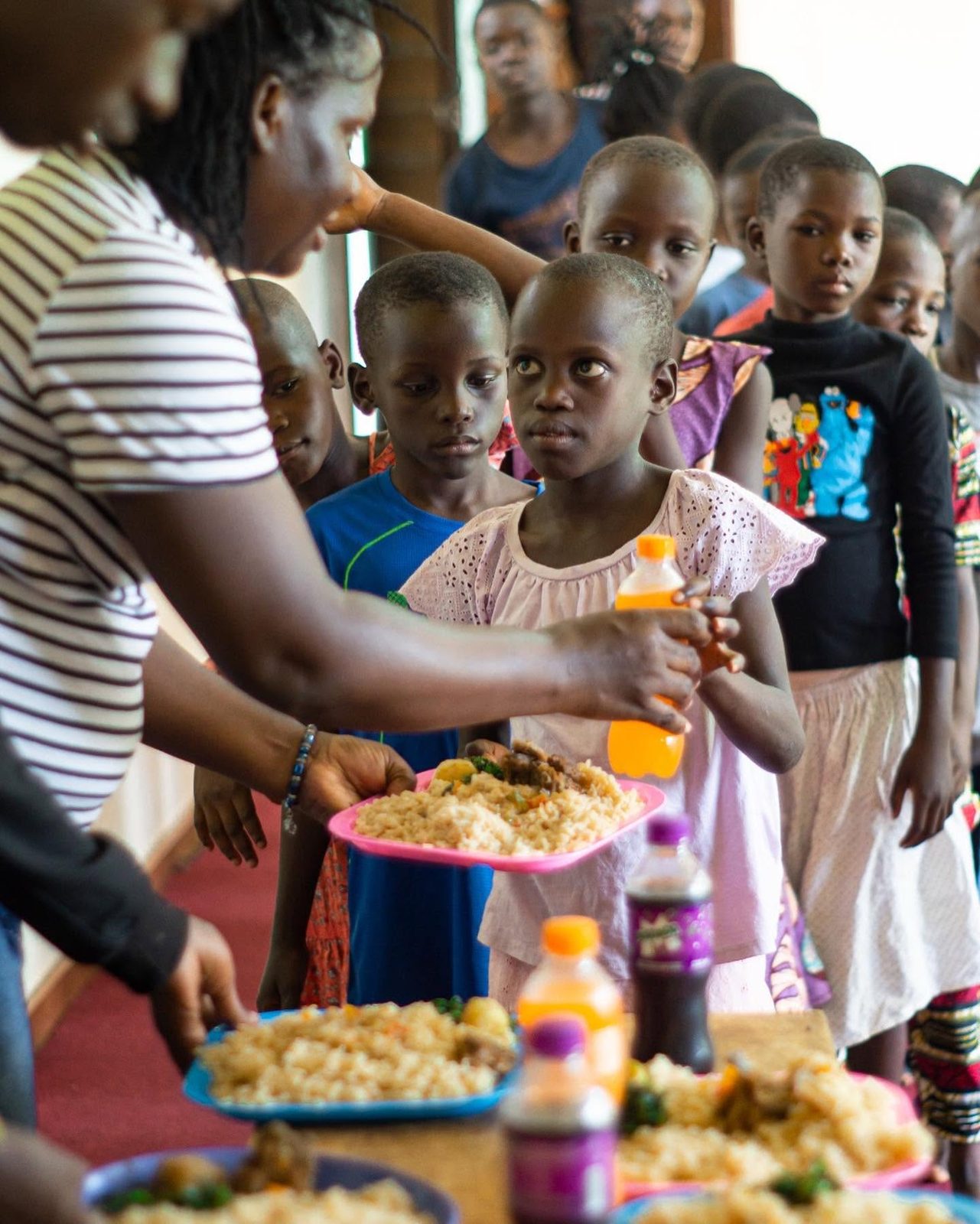
Feeding 50 children is a serious logistical operation, and we are proud of how unremarkable it looks. Meals arrive daily, cooked from the local foods above, eaten together. Nobody watches the pot anxiously. Nobody hoards. New children often do at first, and the day a child stops keeping bread aside for later is the day you know the message has landed: there will be food tomorrow, and the day after, and the day after that.
That reliability is the entire achievement. As we said in what sponsorship provides, the gift isn't one meal; it's the fact that meals stopped being something our children think about. You can see where food fits in an ordinary day in daily life at Tender Love.
How supporters keep the plates full
Food is our most constant cost. It is needed every single day, for every single child, at prices that rise and fall with the seasons, which is why steady giving suits it so perfectly. A monthly sponsorship at any level becomes part of the reliable stream that keeps the kitchen stocked, and our guide to what sponsorship costs and covers shows how the amounts translate.
One-off gifts help too, especially in the expensive weeks around school terms, and you can give in a couple of minutes through our ways to help page. However you give, know exactly what it becomes: matooke, beans, greens and groundnut sauce, served hot to a child who no longer wonders whether dinner is coming. If you'd like to know more about how we feed the family, ask us. Food is a subject we never tire of.
Frequently asked questions
Why is child nutrition in Uganda such an important issue? +
What do children in Uganda eat to stay healthy? +
How does nutrition affect a child's education? +
Why do the earliest years of nutrition matter most? +
How does clean water relate to child nutrition? +
How does Tender Love feed 50 children? +
What is the best way to help feed children in Uganda? +
Every child deserves to be loved
Your support helps provide food, education, healthcare and a loving Christian family for vulnerable children in Jinja, Uganda. Will you help today?