Why School Fees Can Keep Vulnerable Children Out of School in Uganda
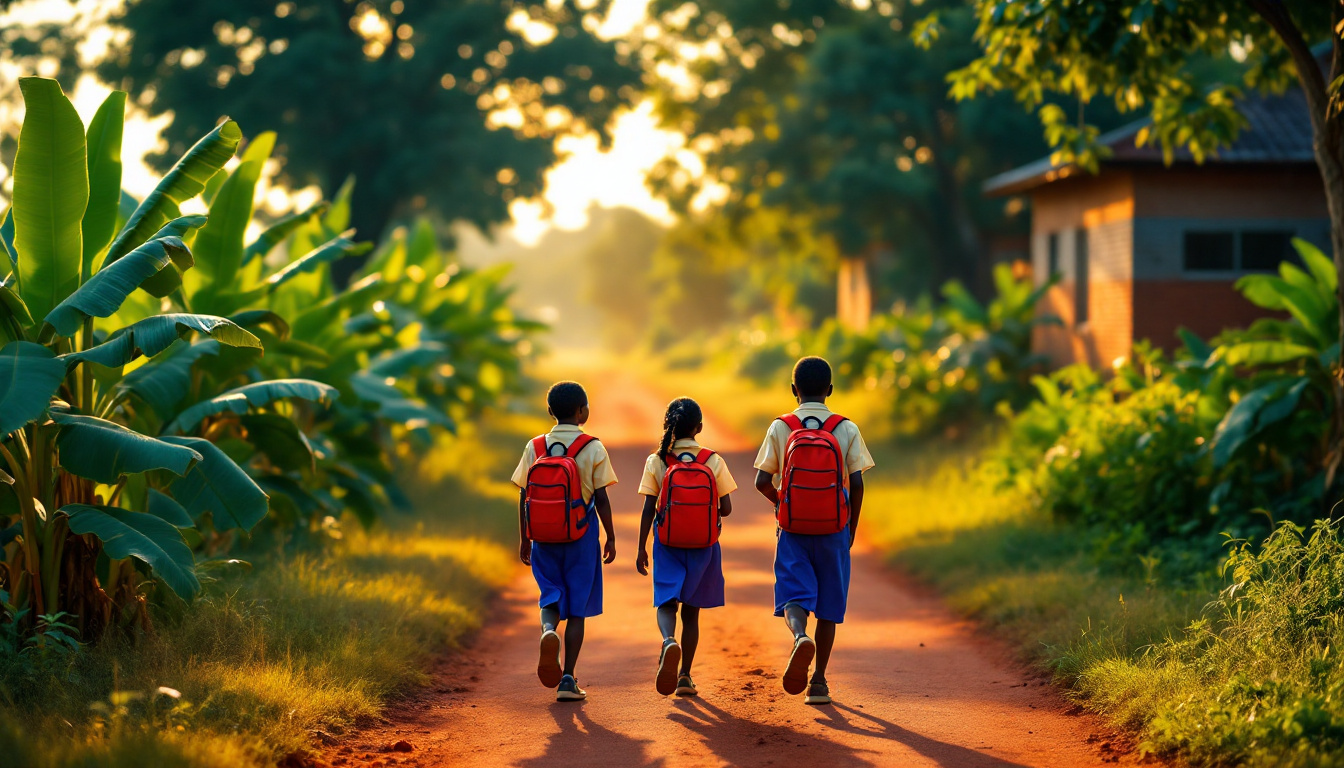
Here is a puzzle that confuses almost everyone outside East Africa. Primary school tuition in Uganda has been officially free since 1997, yet school fees in Uganda remain one of the main reasons vulnerable children sit at home while their classmates learn. Ask any parent in Jinja what keeps them awake at night and fees will be near the top of the list.
Both things are true at once, and understanding how takes about ten minutes. This article walks through the real bill behind "free" education, the termly rhythm that turns modest costs into recurring crises, what actually happens to a child when the money runs out, and what it takes to make sure it never does.
Free school, empty desks
Uganda deserves real credit here. Universal Primary Education, introduced in 1997, was one of Africa's earliest and boldest moves to abolish primary tuition, and it brought millions of children into classrooms. A later programme extended the idea to secondary school in 2007. On paper, a Ugandan child can be educated for very little.
In practice, every parent knows the other half of the story. Tuition is one line on a much longer bill, and the rest of that bill never went away. The result is a system where school is free the way a "free" flight is free: the ticket costs nothing and everything around it costs money you must find, on a schedule you don't control.
The real bill behind free tuition
What does a family actually have to provide before a child can sit in a classroom? The list is longer than most donors imagine:
- A uniform and shoes. Usually compulsory, always outgrown. A child without them can be turned away at the gate, whatever the tuition rules say.
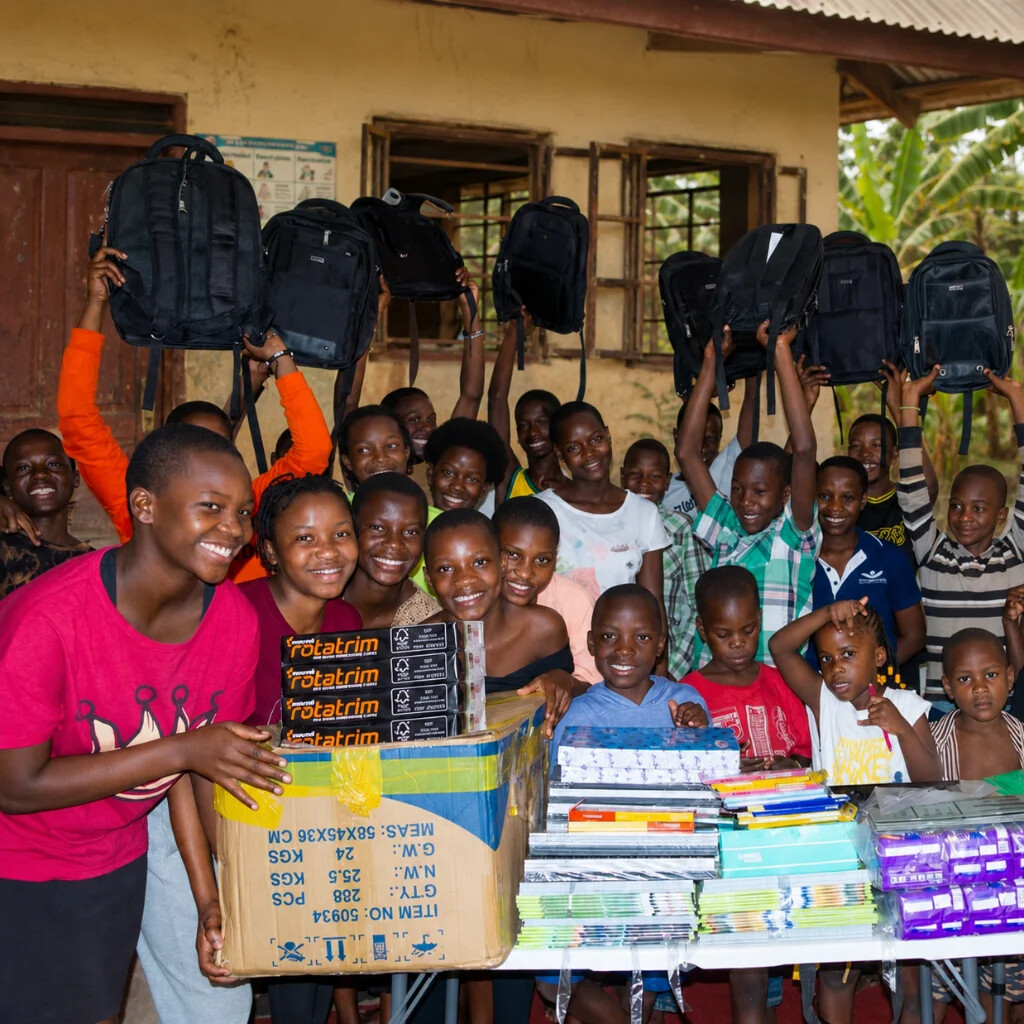
- Exercise books, pens and materials. Modest items that multiply across subjects and terms, and vanish, as school supplies do everywhere on earth.
- Exam fees. Assessment costs money, and national examinations carry their own charges as a child moves up.
- School charges and requirements. Many schools ask families to contribute to running costs or to supply practical items each term. Individually small, collectively decisive.
- Lunch and transport. A hungry child learns little, and some schools are a long way from home. Both cost money every single week.
None of these numbers is large by Australian standards. That was never the point. The point is that they recur, term after term, for every child in the household, for years, in families whose income is neither steady nor certain. We looked at the full picture of what schooling involves in our guide to education for orphaned and vulnerable children in Uganda.
Three terms, three deadlines
Uganda's school year runs in three terms, and that rhythm shapes family life more than any other financial fact. Costs don't spread gently across the year; they arrive in waves. Each new term opens with fees and charges due, uniforms that no longer fit, and a fresh list of requirements, all at once, three times a year.
For a family living on market trading or casual work, a term boundary is a cliff edge. You can be perfectly fine in the middle weeks of a term and desperate at the start of the next one. It's why our own planning at Tender Love revolves around the school calendar, and why we wrote in our post about life in Jinja that steady monthly income is what lets a household meet the expensive weeks without scrambling.
What happens when the money runs out
This is the part polite fundraising tends to skip, so let's say it plainly. When fees and charges go unpaid, children are commonly sent home from school until the balance is settled. Teachers don't enjoy it and schools don't want it; they have their own bills to meet. But the child is the one standing on the road at ten in the morning, in uniform, going home.
Being sent home is rarely a single event. It begins a spiral we described in our article on education and the poverty cycle: missed weeks become failed assessments, failed assessments become repeated years, and repeated years make a child older, more discouraged and more expensive to keep in school than the siblings coming up behind them. Somewhere in that spiral, quietly and without any formal decision, a childhood's education ends.
The cruelty of the school-fees trap is its smallness. The sums involved at any single moment are often trivial by donor-country standards. What defeats families is not the size of the bill but its relentlessness.
Why vulnerable children are hit first
Inside a stretched household, fees compete with food and medicine, and someone has to lose. The children who lose first are the ones with the weakest claim on the family purse: the orphaned niece taken in after a funeral, the child of a relative who fell ill, the eldest girl who can mind babies and carry water instead.
This is why school fees sit at the centre of our work with children without parental care. A child with no adult fighting for their fees has no defence against the spiral above. Paying those fees reliably is not an educational nicety; it is child protection in its most practical form, because a child in a classroom is visible, supervised and pointed at a future.
The secondary-school cliff
Everything above applies to primary school. At secondary level the ground drops away. Tuition returns in earnest, boarding is often involved, and costs rise steeply just as a young person's other options, work and marriage among them, start pulling. For most vulnerable children in Uganda, this is where the journey ends without deliberate, sustained support.
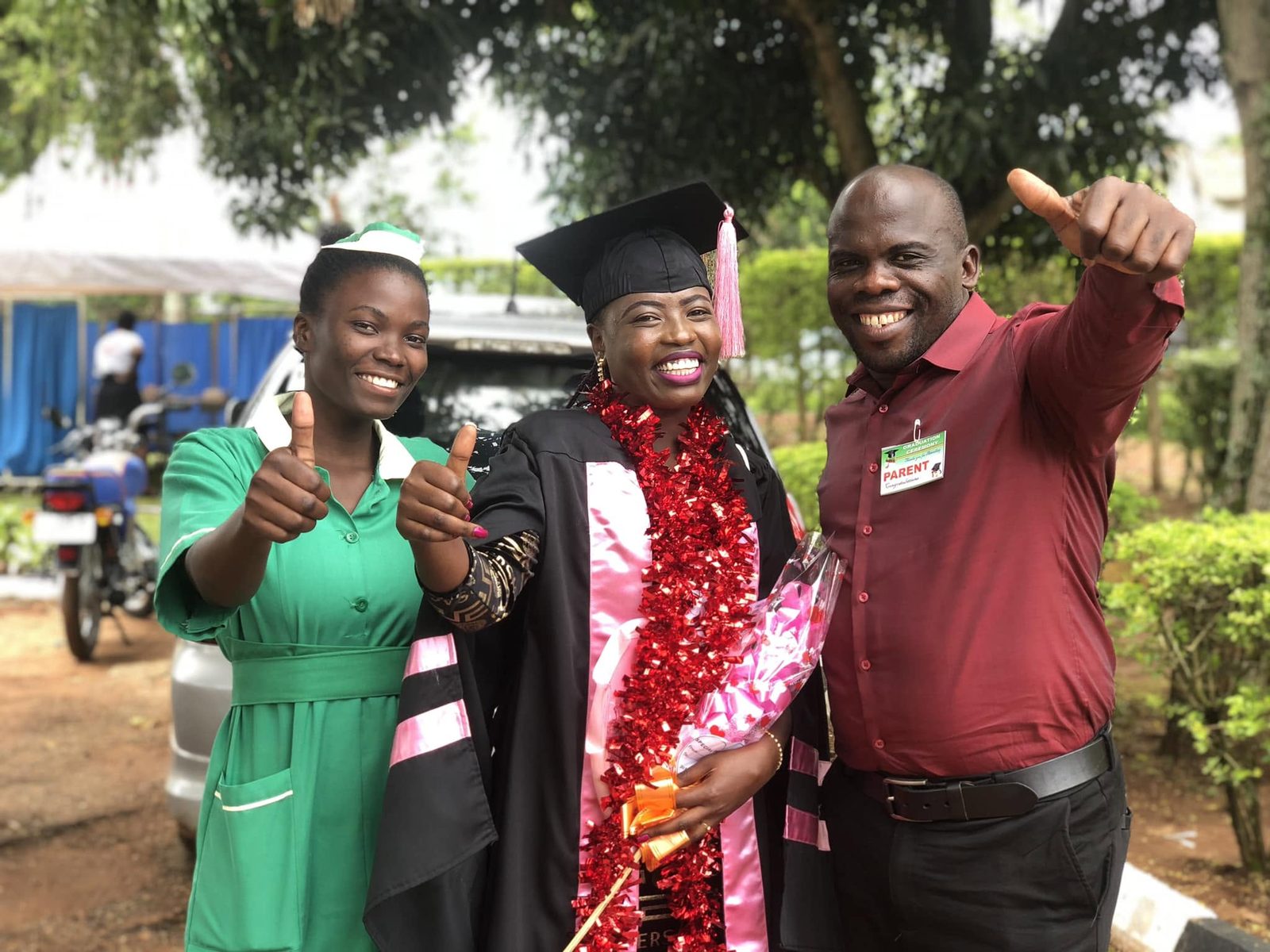
It is also exactly where support pays its greatest dividend. A young person carried through secondary school or vocational training crosses the line we described in our education cornerstone: they become an adult the poverty cycle cannot easily reclaim, and a future parent whose own children's schooling will never be in question. When our graduates come home in a cap and gown, that is the cliff they have climbed.
What good fee support looks like
Because the trap is made of recurrence, help has to be made of reliability. A single term's fees is a genuine kindness, and we never refuse one. But the support that actually changes a child's trajectory has a particular shape:
- It covers the whole bill. Fees plus the uniform, books, exams, lunch and transport that make the fees usable.
- It arrives before every term. On the school's calendar, not the donor's, so a child never stands in that gateway conversation about balances.
- It continues for years. Long enough to carry a child over the secondary cliff, not just through one photogenic term.
- It sits inside whole-of-child care. A fed, rested, settled child is the one who can actually use the school place, a point we unpacked in what children really need to thrive.
Notice that this shape is exactly what steady monthly giving produces, and exactly what sporadic giving, however generous, cannot.
How Tender Love handles school costs
All 50 children in our care are in school, and education is the largest single cost we carry. Fees are paid on the school calendar, uniforms and supplies are bought before terms begin, and the household around each child supplies the meals, sleep and encouragement that turn a school place into learning. Our older young people are supported into secondary and vocational study, and our graduates are the proof the system works.
None of this is sophisticated. It is simply the school-fees problem solved the only way it can be solved: completely, on time, every term, for years. What makes it possible is supporters whose giving has the same shape.
How you can help
Monthly sponsorship is fee support in its strongest form: money that arrives before every term does, at whatever level suits you. Our guide to what sponsorship costs and covers shows how the suggested amounts of $10, $25, $50 or $100 a month translate into real provision, and what sponsorship provides shows everything else your gift carries with it.
One-off gifts are wonderful too, especially around term time, and you can give one in a couple of minutes through our ways to help page. And if you'd like to know when Uganda's school terms fall, or anything else about how school costs work for our family, ask us. We plan our whole year around those dates; we're glad to share them.
Frequently asked questions
Is school really free in Uganda? +
How much are school fees in Uganda? +
What happens to children who can't pay school fees? +
Why does Uganda's three-term school year matter for families? +
Why are orphaned children more likely to miss school? +
Does Tender Love pay school fees for its children? +
What is the best way to help with school fees in Uganda? +
Every child deserves to be loved
Your support helps provide food, education, healthcare and a loving Christian family for vulnerable children in Jinja, Uganda. Will you help today?