Why Education Is One of the Most Powerful Ways to Break the Cycle of Poverty in Uganda
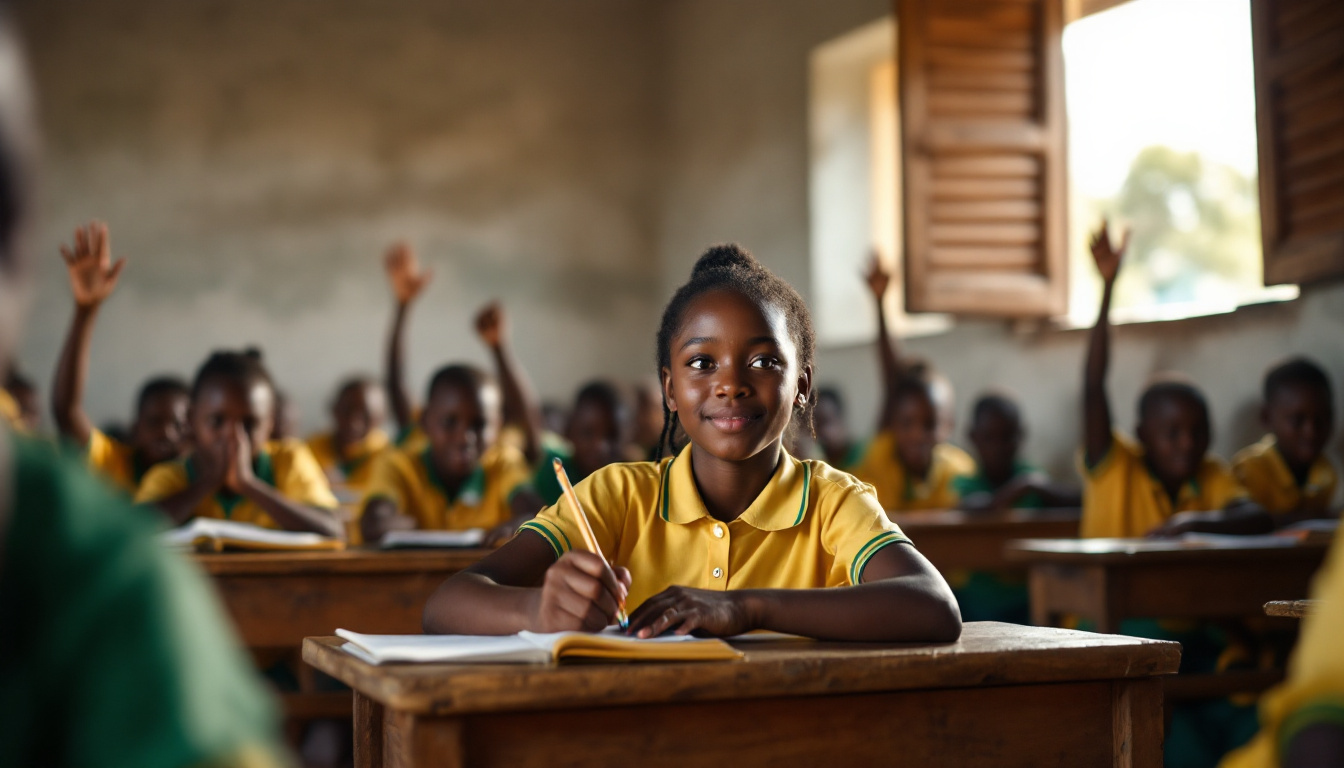
Talk honestly about education and poverty in Uganda and you're really talking about one question: how does a child born into hardship end up somewhere different? Not rescued for a season, genuinely somewhere different, as an adult, with children of their own who never know the hardship their parent grew up in.
There are few reliable answers to that question anywhere in the world. School is the main one. This article explains why the poverty cycle is a cycle, why education is the most dependable way out of it, why that exit keeps closing for the children who need it most, and what it actually takes to hold it open for one child, year after year.
How the cycle works
Poverty persists across generations for reasons that have nothing to do with effort or character. A parent with little income can't cover schooling costs, so a child starts work young. An adult without schooling can only sell their labour cheaply, so their own children face the same choice a generation later. Each step is a reasonable response to an impossible situation; the sum of the steps is a loop.
It's worth saying plainly: families inside this loop work astonishingly hard. The cycle isn't laziness. It's arithmetic. And that's precisely the hopeful part, because arithmetic can be changed. The loop has one famously weak point, and every parent in Uganda knows what it is. Ask a mother selling vegetables at the roadside what she wants for her children and you will almost never hear "money". You'll hear school.
Why education is the exit
She's right, and the global evidence agrees with her. Development economists have studied the returns to schooling for half a century, and World Bank research has long estimated that each additional year of schooling is associated with roughly ten per cent higher earnings, one of the most consistently replicated findings in the economics of education, and stronger still for girls and in lower-income countries.
The reason is intuitive. Schooling converts a child's only inherited asset, time, into the one asset poverty can't repossess: capability. Land can be lost, tools can be stolen, but literacy, numeracy and a qualification walk with a person for life. Education is the single investment in a poor household that compounds instead of depreciating.
More than earnings
The wage line is only half the story. Education changes what happens in the next generation before it's even born. Organisations like UNICEF have documented the pattern for decades: educated mothers marry later, have healthier children, are far more likely to send those children to school, and are harder to cheat, exploit or disenfranchise.
That's the real meaning of "breaking the cycle". One educated child doesn't just earn more. They become a parent whose own children's schooling is never in question. The loop doesn't merely pause; it fails to reproduce itself. We've watched this begin in our own family: our graduates are the first link of a chain that will look completely different in thirty years.
If school is free, what's the problem?
Uganda was one of the first countries in Africa to abolish primary school tuition, introducing Universal Primary Education in 1997, a genuinely important reform that put millions of children in classrooms. So people overseas reasonably ask: if primary school is free, why does poverty still keep children out of it?
Because tuition was never the whole bill. A child needs a uniform and shoes, exercise books, pens and materials, exam fees, often transport, and food in their stomach to make any of it worthwhile. Secondary and vocational study add real tuition on top. None of these costs is large by wealthy-country standards; all of them are recurring; and for a family already stretched, recurring is what breaks you. We itemised these costs in our guide to education for orphaned and vulnerable children in Uganda.
Why vulnerable children are pulled out first
Inside a struggling household, school fees compete with food and medicine, and school loses, rationally, every time. When something has to give, it's the school costs of the children with the weakest claim on the family's resources: the orphaned niece being fostered, the child of the relative who died, the eldest girl who can mind babies or carry water.
This is why children without parental care sit at the centre of the education problem. They are the children with no adult whose job it is to fight for their fees. It's also why we treat schooling not as an extra we provide but as core protection: a child in a classroom is visible, supervised, fed into a routine and pointed at a future, which is much of what child protection practically means.
The cruel maths of interruption
The poverty-education trap has one more mechanism worth understanding: interruption compounds. A child pulled out of school for a term falls behind; behind is discouraging; discouraged children repeat years, and each repeated year raises the cost and the age gap until dropping out feels like relief. Education only works as an escape route if it's continuous, and continuity is exactly what poverty attacks.
That's the insight that shapes how we think about help. The valuable thing isn't a school bag or one term's fees, generous as those are. It's the promise that the fees will be there every term until the job is done, the thing steady sponsorship exists to provide.
Enrolment isn't the finish line
One more honest complication: sitting in a classroom is necessary, not sufficient. Class sizes in Uganda can be very large, and a child who is hungry, exhausted or anxious learns little even from a good teacher. The conditions around the school day (meals, sleep, a calm home, someone who asks how the exam went) do a surprising share of the educational work.
This is where schooling connects to everything else we've written about what children need to thrive: the well-fed, well-rested, well-loved child extracts far more value from the same classroom. Education breaks the poverty cycle, but it's the whole household behind the child that breaks it, a school uniform with nothing behind it is just clothing.
What this looks like at Tender Love
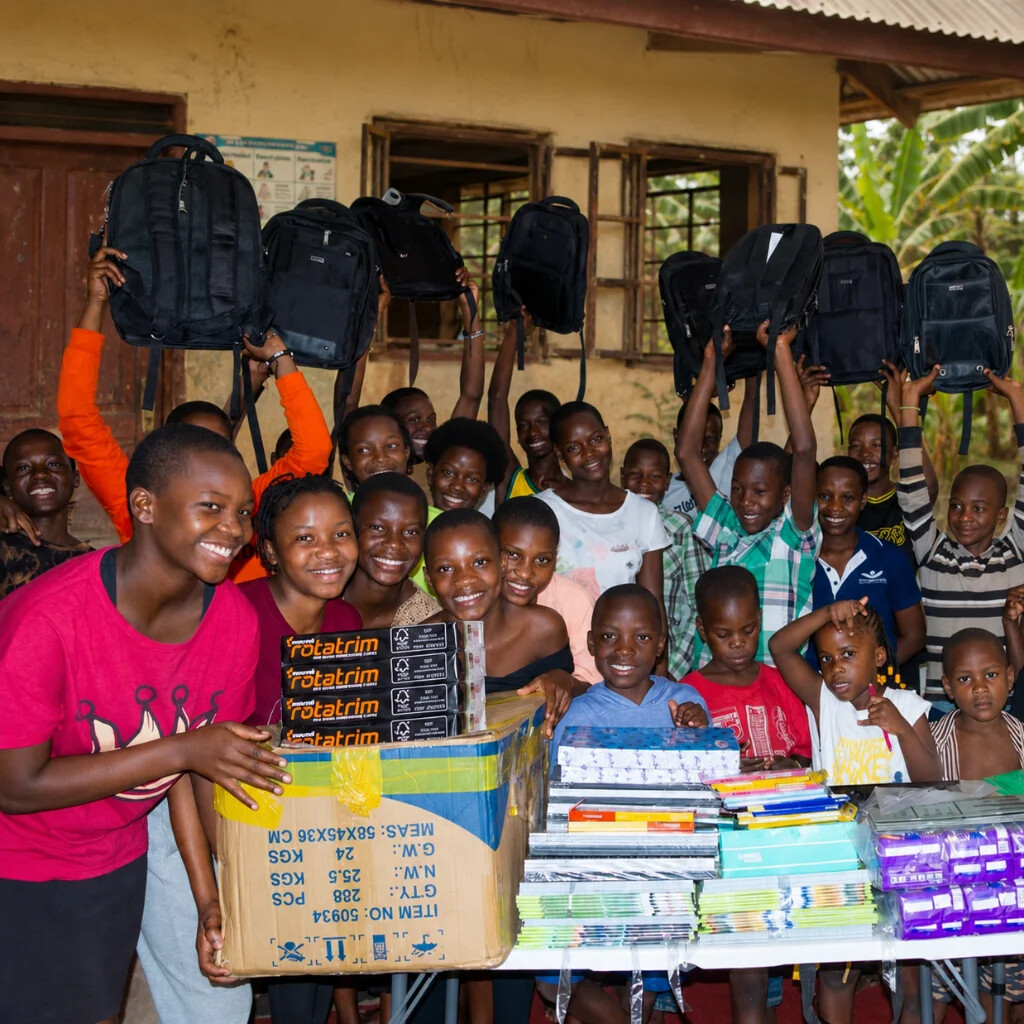
Every one of the 50 children in our care is in school: fees paid, uniforms bought, supplies in hand, transport arranged, homework done at a table with the lights on. Behind that sentence sits the entire machinery of the household: the meals, the routines, the consistent carers, the vegetable gardens, the prayers before exams.
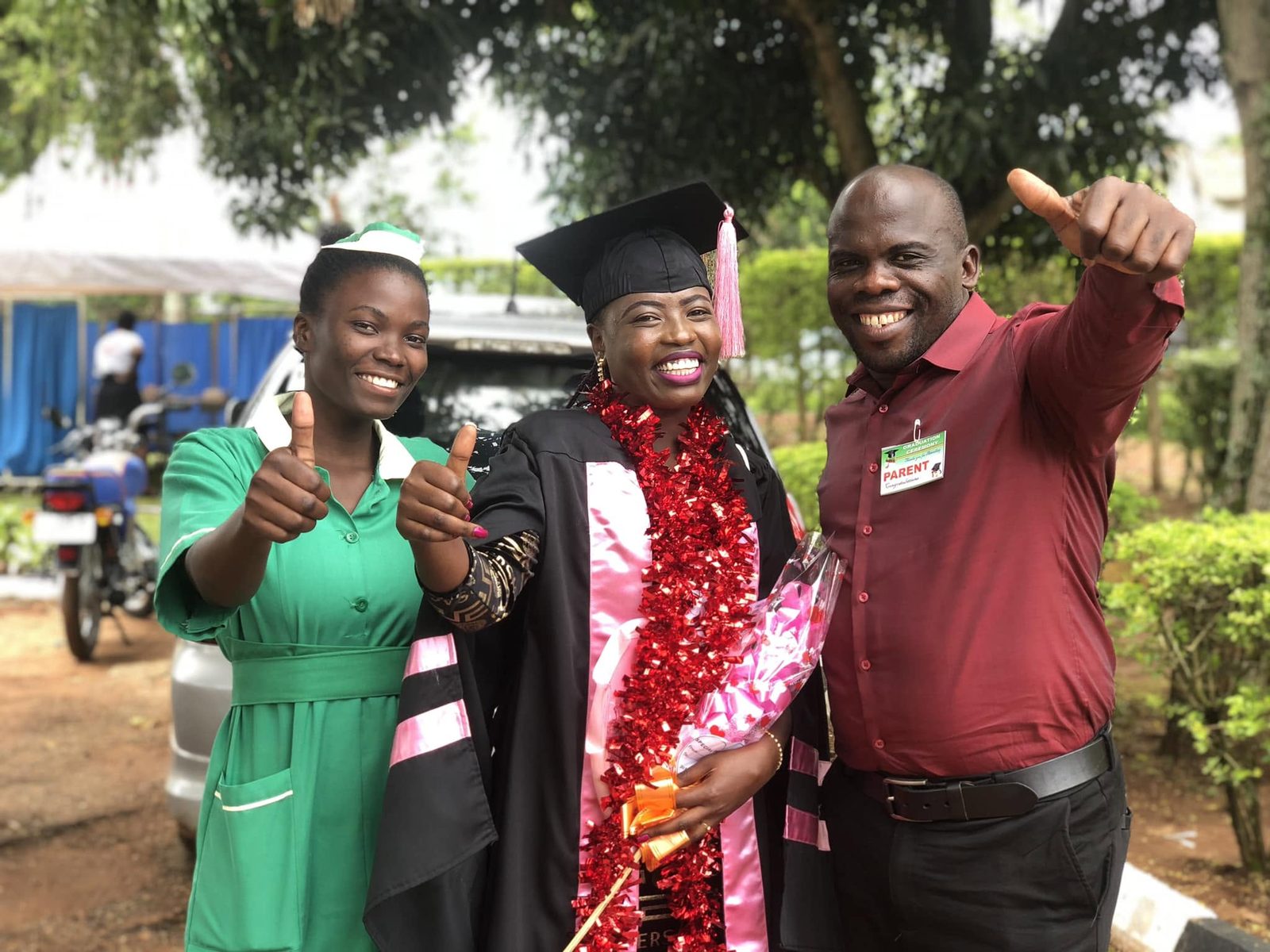
Education is the largest single cost we carry, and we carry it on purpose. Food answers today; school answers the next forty years. When our graduates come back through the gate in a cap and gown (and they do), we're not just celebrating a certificate. We're watching the cycle that brought each child to our door fail to claim them.
How supporters hold the door open
If you take one idea from this article, take the shape of the problem: the poverty cycle is beaten by continuity, and continuity is precisely what a supporter can provide from anywhere in the world.
A monthly sponsorship, at whatever level suits you, is school fees that never fail to arrive, term after term, which is the exact thing a vulnerable child's education cannot otherwise count on. Our guide to what sponsorship costs and covers shows how the amounts translate, and one-off gifts toward school costs are always welcome through our ways to help page.
And if you want the evidence that it works, don't take our word for it: ask us about our graduates. Their story is the whole argument, told properly.
Where to go from here
Education and poverty in Uganda are locked together, but the lock turns. A child kept in school, continuously, with a fed and loved household behind them, becomes an adult the cycle cannot hold, and a parent the cycle cannot reach. That transformation is available, today, for the price of steadiness.
Read how we support education in practice, meet the children doing the hard part, or become the steadiness a child's schooling runs on.
Frequently asked questions
How are education and poverty linked in Uganda? +
Does education really help children escape poverty? +
Isn't primary school free in Uganda? +
Why are orphaned and vulnerable children pulled out of school first? +
Why does continuity matter so much in a child's education? +
How does Tender Love support education? +
What is the best way to support a child's education in Uganda? +
Every child deserves to be loved
Your support helps provide food, education, healthcare and a loving Christian family for vulnerable children in Jinja, Uganda. Will you help today?