Safe Water, Healthy Children: Why Clean Water Matters in Uganda
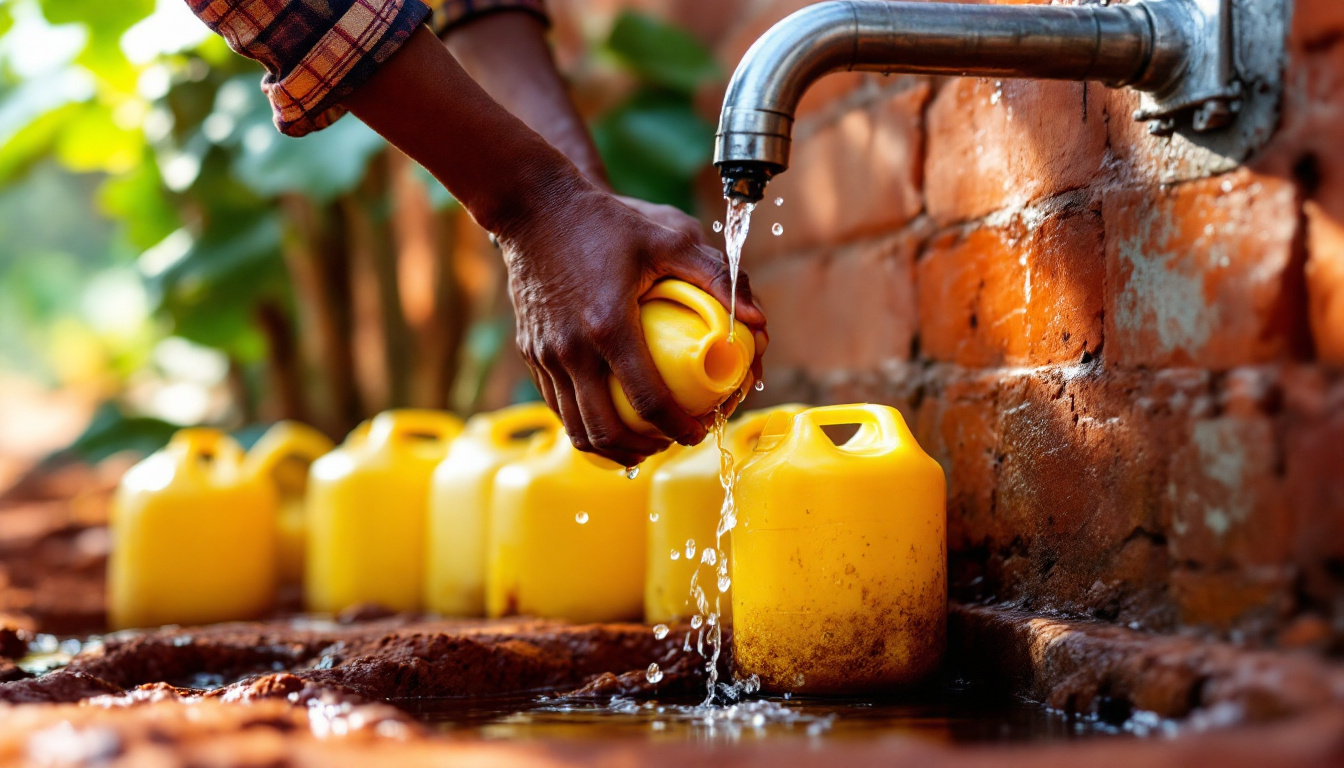
Here is an irony we live with every day. Jinja, our home town, sits at the source of the Nile on the shore of Lake Victoria, one of the largest freshwater lakes on earth. By any measure of geography, water is the one thing we should never lack. And yet clean water for children in Uganda remains one of the great deciding factors in whether a childhood goes well.
The difference, of course, is that word clean. Water is everywhere; safe water has to be made, carried, stored and paid for. This article explains what unsafe water quietly does to a child, the hidden costs it loads onto poor families, and why we treat clean water at Tender Love with the same seriousness as food, school and prayer.
Surrounded by water, short of safe water
Uganda is not a dry country, and Jinja least of all. The Nile begins here; the lake stretches to the horizon; the rains, in season, are generous. Visitors sometimes assume that settles the matter.
But raw water and drinking water are different products. Lakes, rivers, shallow wells and rain barrels carry whatever runs into them, and what runs into them near dense, poor settlements includes exactly the things that make children sick. Piped, treated water exists and is growing, but connections, tariffs and reliability put it beyond many households, who instead buy water by the jerrycan, queue at shared taps and boreholes, or take their chances with sources they know are doubtful. Safe water in Uganda is less an endowment than a daily achievement, and it is the poorest families for whom it is hardest to achieve.
What unsafe water does inside a child
The harm rarely announces itself. It looks like a child who is often a bit unwell: stomach upsets that keep returning, worms, fevers, weeks that drain a small body of what it has taken in. The World Health Organization and UNICEF have said it for decades: diarrhoeal disease driven by unsafe water and poor sanitation remains one of the most serious threats to young children's health in low-income countries, and one of the most preventable.
We wrote in our article on child nutrition that unsafe water steals nutrition from the inside, and it bears repeating here: a child can be fed adequately and still lose the race if repeated waterborne illness keeps taking back what meals put in. Water is not adjacent to nutrition. It is half of it.
And as with everything in a child's life, the losses compound. Sick weeks are missed school weeks, and we showed in our education cornerstone what interruption does to a school career. A single water source can quietly shape a whole classroom's attendance register.
The hidden costs: time, fuel, money
Even before anyone falls ill, unsafe water taxes a poor household three ways:
- Time. Water must be fetched, sometimes from a long way off, in twenty-litre jerrycans that weigh twenty kilograms full. Hours of a family's day can disappear into carrying water before anything else begins.
- Fuel. The standard defence against doubtful water is boiling, and boiling costs charcoal or firewood, every day, forever. Families literally burn money to make water safe.
- Money. Buying trusted water by the jerrycan, or paying at a tap, turns a free gift of geography into a recurring bill that competes with food and school fees.
None of these costs appears in any statistic about disease. All of them come out of the same stretched family budget we keep writing about, which is why water sits so close to every other subject on this blog.
The errand that falls on girls
There is a fairness dimension here that deserves its own paragraphs. In much of East Africa, fetching water is children's work, and disproportionately girls' work. When the water point is distant or the queue is long, it is most often a girl whose morning disappears into the errand, whose school day starts late or not at all, and whose body carries loads it shouldn't.
So a nearby, reliable source of safe water is quietly also a girls' education intervention and a child protection one: a shorter errand is a safer errand, and an hour not spent carrying water is an hour in a classroom. Few investments touch so many parts of a girl's life at once.
Water, sanitation, hygiene: one subject
Health workers bundle water, sanitation and hygiene together under one name, WASH, because the three stand or fall together. Clean water is undone by dirty storage. Latrines protect the water table and the children who use them. And handwashing with soap, the cheapest intervention of the three, is among the most powerful health habits a household can keep.
This is why "clean water" at a children's home can never just mean what comes out of the tap. It means covered storage, soap where the children wash, latrines kept decent, and the unglamorous daily habits that make all of it stick. Like most of what children truly need, it is a collection of small faithful things rather than one dramatic one.
What safe water looks like in practice
For a household in our part of Uganda, keeping children's water safe means a chain with no broken links:
- A trusted source. A protected borehole, a piped tap, or harvested rainwater from a clean roof and tank.
- Safe carrying and storage. Clean jerrycans and covered containers, because good water is easily spoiled on the journey home.
- Treatment where needed. Boiling or treating any water the household doesn't fully trust, especially for the youngest children.
- Soap and habits. Handwashing before meals and after latrines, taught early and modelled daily.
Every link costs a little money and a little discipline. The reward is a household where stomach illness is the exception rather than the rhythm of life.
Water at Tender Love
Clean water is part of the daily provision at our home in Jinja, alongside meals, schooling and healthcare, and it works the unglamorous way described above: trusted sources including the water tank that stands in our compound, covered storage, soap at the wash points, and water chores shared out among the children as part of ordinary family life.
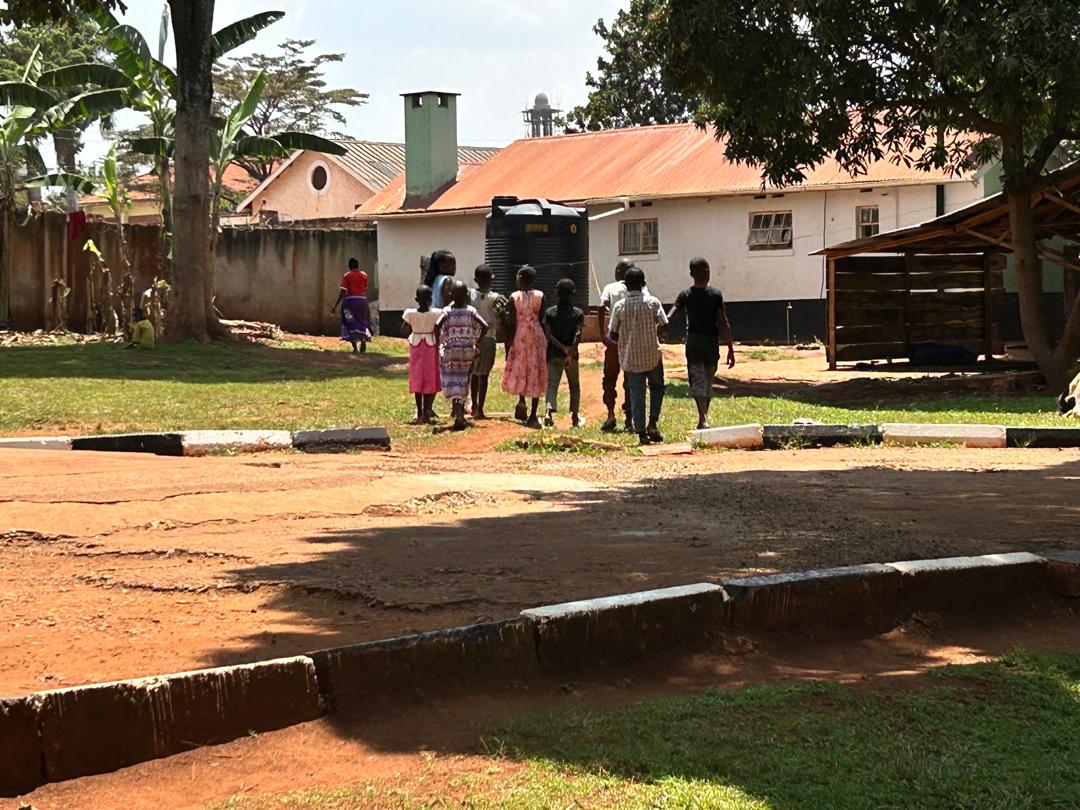
The children who carry watering cans to our vegetable gardens are learning the same lesson the household runs on: water, managed well, turns into food, health and growth. You can see where these chores fit in an ordinary day in daily life at Tender Love.
Water and everything else
If you have read the other articles in this series, you will recognise the shape of this one. Safe water protects nutrition. Nutrition powers schooling. Schooling breaks the poverty cycle. Reliable adults hold all of it steady. Pull any one thread and the others loosen; secure them together and a childhood quietly flourishes.
That is the deepest reason we resist splitting a child's needs into separate appeals. A household either works as a whole or it doesn't, and the water barrel is as much a part of that whole as the school fees and the evening prayers.
How you can help
Clean water is another of those needs that is met by steadiness rather than drama: modest recurring costs for sources, storage, soap and fuel, met every week without fail. That is exactly the shape of monthly sponsorship, which sustains the whole household a child drinks, washes and grows in. Our guide to what sponsorship provides shows where water sits among everything else your support becomes.
One-off gifts through our ways to help page are always welcome too. And if you'd like to know more about how we keep 50 children in safe water, from tank to cup, ask us. It is one of the least photographed and most important things we do.
Frequently asked questions
Why is clean water a problem in Uganda if the country has so much water? +
How does unsafe water affect children's health? +
How does water affect children's education? +
What is WASH and why is it treated as one subject? +
How do families in Uganda make water safe to drink? +
How does Tender Love provide clean water for its children? +
What is the best way to help provide clean water in Uganda? +
Every child deserves to be loved
Your support helps provide food, education, healthcare and a loving Christian family for vulnerable children in Jinja, Uganda. Will you help today?