Can a Small Monthly Donation Really Make a Difference in Uganda?
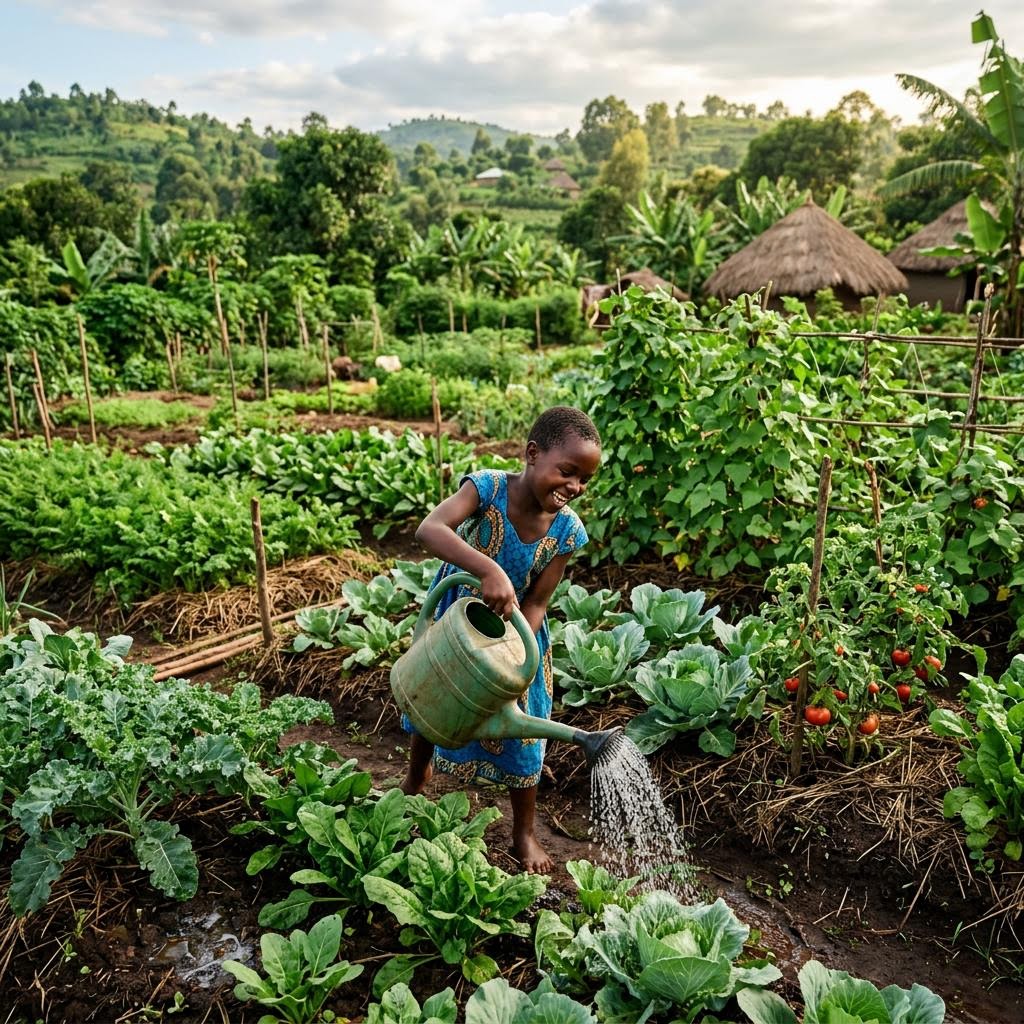
Of all the questions people ask before making a monthly donation to Uganda, this is the one they're shyest about: is my small amount even worth giving? Some supporters have apologised to us for the size of their gift before they've even made it.
So let us answer plainly, as the family that cooks the meals and pays the school fees on the receiving end: yes, it makes a difference, and we can show you exactly how. Not with inflated promises, but with the arithmetic of our own kitchen. We'll also be honest about what a small gift can't do on its own, because that honesty is precisely why it works.
Smallness is the wrong measure
Notice something about the question itself: nobody asks whether a large donation makes a difference. The doubt only ever attaches to small gifts, as though impact were a privilege reserved for people with deep pockets.
From inside a children's home, that assumption looks exactly backwards. Our household of 50 children is not carried by a few large gifts. It is carried, week in and week out, by ordinary people giving ordinary amounts with extraordinary consistency. The question that actually decides a gift's impact is not how big? It is how long, and how reliably? Everything below unpacks that.
Small there is not small here
First, the simple geography of value. Uganda is a developing economy, something the World Bank's country overview sets out in detail, and everyday costs here sit far below what they do in Australia, the UK or the United States. The amount that disappears on a couple of coffees at home arrives in Jinja with real purchasing power: it becomes vegetables in the evening pot, exercise books, soap, a contribution toward a term's school fees.
We won't pin fake precision on that by quoting prices that shift with the seasons and the exchange rate. The honest version is simply this: when your gift crosses into Ugandan shillings, it grows in usefulness. What feels like loose change where you live is groceries where we live.
The arithmetic of twelve
Now the part people consistently underestimate. A small monthly gift is not one small gift. It is twelve gifts a year, arriving on schedule, for as long as you continue. Ten dollars a month is a hundred and twenty dollars a year; over three years it quietly becomes several hundred, given in a form we can actually plan against.
That last part matters more than the total. As we explained in our article on why consistency matters, a children's home runs on costs that repeat: food every day, carers and rent every month, fees every term. Income that repeats on the same rhythm can be promised against before it arrives. One hundred and twenty dollars given in a single envelope is a blessing we spend once. The same amount arriving as twelve dependable tens helps us promise a child that the table will be set all year, and keep that promise.
You were never meant to carry it alone
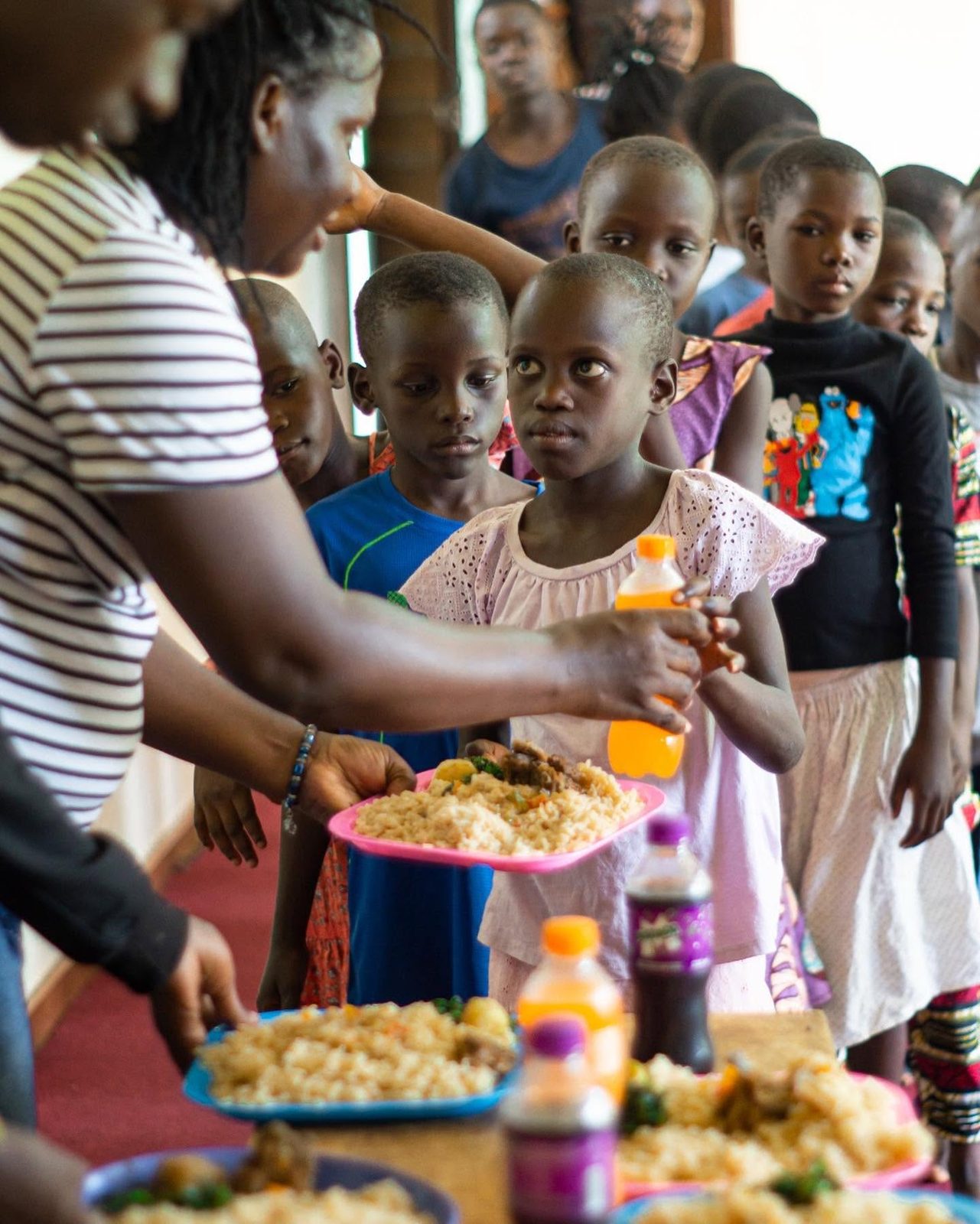
Here is the picture that finally settles the "too small" worry for most people. Your monthly gift does not work alone, and it was never supposed to. It joins one shared provision for the whole household, alongside the gifts of other supporters in other countries, each of them also modest, each of them also wondering if they matter.
Think of how this house actually gets fed. No single person carries a household of 50 children. Many streams, each one small, together make a river. Remove any one of them and the river is thinner. The jerrycan is filled a litre at a time; nobody asks whether the litre matters. Organisations like UNICEF Uganda document how many children in this country still lack the basics, and the response to a need that size was always going to be many hands rather than a few.
What a small gift honestly can't do
We promised honesty, so here it is. A ten dollar monthly gift will not, by itself, put a child through secondary school or fund the whole of what sponsorship provides. If a charity tells you your small gift alone will transform a life, it is selling you a story.
But notice what that limitation actually means. It doesn't mean your gift is too small to matter. It means your gift is one voice in a choir, and a choir never asks a single voice to sing every part. The meals your gift helps fund are real meals. The schoolbooks are real books. The difference is genuine; it is simply shared, and shared difference is how every lasting work in the world gets done.
The smallest gift in the Bible
As a Christian family, we can't discuss small gifts without remembering the most famous one ever given. Jesus watched wealthy people place large sums into the temple treasury, then saw a poor widow drop in two small copper coins, and said she had given more than all the rest, because they gave out of abundance and she gave out of what she had (Mark 12:41-44 tells the story in full).
We take that seriously, not as a lovely sentiment but as an actual measure of value. The worth of a gift is not its size; it is the heart and the faithfulness behind it. Some of the gifts that have carried this family furthest came from supporters who had the least to spare. We honour every gift the same way: it goes into the same pot, feeds the same children, and is received with the same gratitude.
Small and sustained beats large and brief
One more truth from the receiving end. If the choice is between an impressive amount you might not manage every month and a modest amount you'll barely notice leaving your account, choose the modest one. We said it in our comparison of one-off and monthly giving and it bears repeating: a commitment that strains you tends to end, and an ended commitment helps no one. A gift that fits your life can quietly run for years, and years are what raising children takes.
Start where it's comfortable. You can always grow it later; many of our supporters do, a little at a time, as their circumstances change. The direction of travel matters far less than still being with us next year.
Starting small, starting well
Starting takes about two minutes. Visit Sponsor a Child, choose monthly, and pick $10, $25, $50, $100 or an amount of your own. It goes through our secure Stripe checkout, you can change or stop it any time, and from the first month your gift is doing exactly what this article describes: joining the streams that keep 50 children fed, schooled and safe in Jinja.
And if the doubt lingers, write to us and ask what your amount would actually help with this month. We'll give you a real answer, because the difference a small monthly donation makes in Uganda is not a theory to us. It is our grocery list.
Frequently asked questions
Can a small monthly donation really make a difference in Uganda? +
How much difference does $10 a month actually make? +
Is it embarrassing to give only a small amount? +
Why does money go further in Uganda? +
Is it better to give a small amount monthly or save it up for one larger gift? +
Can I increase my monthly donation later? +
What can't a small monthly donation do? +
Every child deserves to be loved
Your support helps provide food, education, healthcare and a loving Christian family for vulnerable children in Jinja, Uganda. Will you help today?