The Importance of Faith, Hope and Belonging in Christian Orphan Care

Ask what makes Christian orphan care different and you'll often get a vague answer: something about love, something about values. We'd like to do better than that, because at Tender Love the difference is not a mood or a logo. It is a method, and it has three working parts: faith, hope and belonging.
None of the three is decoration. Each one changes something practical about how 50 children in Jinja are raised: how they're spoken to, what they're taught to expect from their future, and whether the house they sleep in ever becomes a family they belong to. This article walks through all three, concretely, from inside the home they shape.
A method, not a label
Plenty of organisations put the word Christian on the gate. The honest question is whether anything inside the gate would change if you took the word down. For us the answer is: almost everything, because faith is not our branding. It is the reason this home exists and the set of instructions it runs on.
Tender Love began with a calling: dreams of street children coming for comfort, and then one abandoned baby placed into our hands during community evangelism. There was never a business plan. There was a conviction that God had asked our family to do something, and the belief that He would provide what obedience would cost. Everything below grew from that beginning.
Faith: the rhythm the home runs on
Scripture gives our work its founding sentence: God is "a father to the fatherless" who "sets the lonely in families" (Psalm 68:5-6). We take that as a job description. If that is who God is and what God does, then a Christian response to an orphaned child is not pity from a distance. It is making sure the child lands in a family.
So faith at Tender Love looks like a rhythm more than an event. Grace before meals. Prayer with children at bedtime and before exams. Worship on Sunday with the church family around us, children singing with their hands in the air because nobody told them to be dignified about joy. Scripture woven through the week, not as a lecture but as the house's shared language for courage, forgiveness and gratitude.
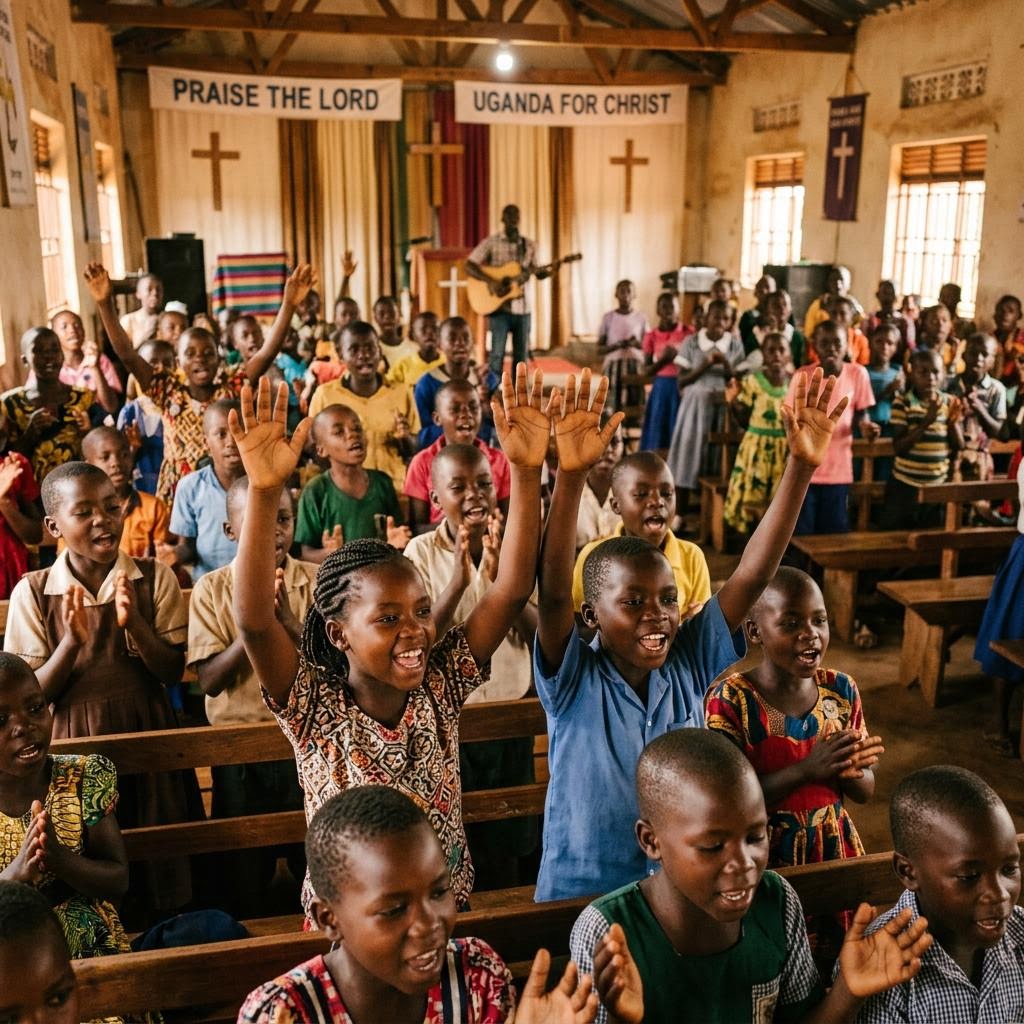
What faith changes in practice
Here is where we refuse to be vague, because faith that changes nothing practical is the kind the Bible itself has little patience for. Concretely, believing each child is made in God's image settles decisions before they're ever argued about:
- How children are spoken to. A child who bears God's image is never a case number, a burden or a fundraising prop. It is why we hold dignity rules for how we tell stories: no pity imagery, no trading a child's worst day for a donation.
- What the goal of care is. Not warehousing children safely until adulthood, but raising sons and daughters: fed, schooled, known and loved, the whole provision we described in what vulnerable children actually need.
- How the home treats weakness. Children arrive carrying losses no child should carry. A gospel household has grace built into its walls: failure is met with correction and forgiveness, not shame, because that is how God treats us.
- Why we keep promises. Our word to a child is made in front of God. That raises the cost of breaking it, and we think a watching child can tell.
Hope: teaching children a future tense
A child who has lost parents has usually also lost something quieter: the assumption that tomorrow is worth planning for. Restoring that assumption is slow, deliberate work, and it is what we mean by hope. Not optimism, which is a mood, but expectation with reasons under it.
Practically, hope is built out of education and evidence. School fees paid term after term tell a child their future is being invested in. Homework helped, exams prayed over, and then the day the whole family crowds around a graduate in cap and gown, the proof in the photograph above. Younger children watch those celebrations and quietly revise what they believe about their own story. We wrote on Our Story that hope precedes need: we want the world to see our children's potential before their circumstances, because that is the order God sees them in.
Belonging: the deepest need of all
Feed and school a child and you have met the needs that show. Belonging is the need underneath: to be somebody's, permanently, in a place where your absence would be noticed and your name is known. Psalm 68 doesn't say God sets the lonely in institutions. He sets them in families, which is why we are deliberately one family under one roof rather than a facility: one mother and father figure in Pastor Dominic and me, children who call each other brother and sister, chores and birthdays and squabbles and reconciliation, the ordinary furniture of family life.
Belonging is also the ingredient that makes the other two credible. A child believes "God is your Father" far more readily when fatherly love is standing in the kitchen. And hope holds because the home keeps its promises: nobody ages out of being family here. Graduates come home for Christmas. That permanence is the point.
Why the three only work together
Take one leg away and the stool falls. Faith without hope turns pious and passive, all comfort and no school fees. Hope without belonging produces achievers with nowhere to bring the diploma home to. Belonging without faith has no answer to the hardest question a grieving child asks, which is why: why did this happen, and who am I now? We are not the answer to that question. We point to the Father who is, and we try to make the pointing believable by how we live.
Organisations across the sector, including networks like the Faith to Action Initiative and the Better Care Network, have spent years documenting what children in care need most, and the direction of all of it is the same: children flourish in family. Our faith told us that before we ever read the research. It is good company to be in.
What this means for supporters
If this vision of Christian orphan care rings true to you, you can stand inside it from wherever you live:
- Pray with us. We mean this as the practical request it is. Pray for the children by need if not by name: school terms, health, grief that heals, futures that open.
- Sponsor a child. Monthly sponsorship is faith, hope and belonging funded: the rhythm kept, the school fees paid, the family carried.
- Bring your church. A congregation, small group or Christian school can partner with this family in prayer, giving or a special offering. We'll write more about church partnership soon; until then, write to us and we'll talk it through together.
- Come and see. Visit or volunteer, and meet the family these three words have built.
Faith, hope and belonging: the Bible puts a similar trio in order and says the greatest is love. On the ground in Jinja, we've found they arrive together or not at all, and that 50 children are the living proof.
Frequently asked questions
What is Christian orphan care? +
How is Christian orphan care different from secular care? +
Why does belonging matter so much for orphaned children? +
What does faith change about daily life in a children's home? +
How does hope help children recover from loss? +
How can my church support Christian orphan care in Uganda? +
Can I support Christian orphan care if I'm not religious? +
Every child deserves to be loved
Your support helps provide food, education, healthcare and a loving Christian family for vulnerable children in Jinja, Uganda. Will you help today?